
How to Choose Website Hosting for Small Businesses

Building a website can feel overwhelming when you just want a reliable home for your business online. Many American small business owners find it challenging to sort through technical details without guidance. By focusing on clear website goals, understanding different hosting types, and learning what makes a provider trustworthy, you'll discover a path to a simple and effective online presence without the usual headaches. Clear planning and the right hosting choice make all the difference for small business success.
Step 1: Define Your Website Goals and Needs
Building a powerful online presence starts with understanding exactly what you want your website to accomplish. Small businesses need a strategic approach to website planning that aligns digital goals with broader business objectives.
To define your website goals effectively, start by considering your primary business purpose. Are you looking to sell products directly online, showcase your services, provide customer information, or build brand awareness? Each goal requires different website features and hosting requirements.
Consider these key aspects when defining your website needs:
- Target audience demographics and online behaviors
- Specific business objectives (sales, leads, information sharing)
- Expected website traffic volume
- Functional requirements (e-commerce, scheduling, contact forms)
Your website's purpose will directly impact your hosting needs. A simple informational site requires different resources compared to an online store processing multiple transactions. Take time to map out your specific requirements before selecting a hosting solution.
The clearer you are about your website's goals, the easier it becomes to choose the right hosting platform that supports your business vision.
Step 2: Evaluate Hosting Types and Key Features
Choosing the right web hosting is crucial for your small business's online success. Understanding the various hosting options will help you make an informed decision that balances performance, cost, and your specific business needs.
Small businesses typically have several hosting options to consider. Web hosting types vary significantly in terms of performance, cost, and technical complexity. The main hosting categories include:
- Shared hosting: Most affordable option, good for small websites with low traffic
- Virtual Private Server (VPS): More resources and better performance than shared hosting
- Cloud hosting: Flexible, scalable solution with pay-as-you-go pricing
- Dedicated hosting: Full server control, best for high-traffic websites
Each hosting type offers unique advantages depending on your business requirements. Shared hosting works well for simple websites, while cloud hosting provides excellent scalability for growing businesses that need flexible resources.

Here's a quick comparison of popular hosting types for small businesses:
| Hosting Type | Best For | Pros | Cons |
|---|---|---|---|
| Shared Hosting | Small, new sites | Low cost, easy setup | Limited resources, less secure |
| VPS Hosting | Growing sites | More control, scalable | Higher cost, technical knowledge needed |
| Cloud Hosting | Expanding businesses | Flexible, handles spikes | Variable pricing, may be complex |
| Dedicated Hosting | High-traffic businesses | Full control, high performance | Most expensive, requires maintenance |
Your hosting choice directly impacts website performance, security, and user experience - choose wisely.
Consider these critical features when evaluating hosting options:
- Uptime guarantees
- Bandwidth and storage limits
- Security features
- Technical support quality
- Scalability potential
- Cost-effectiveness
Step 3: Compare Providers for Reliability and Support
Selecting the right web hosting provider goes beyond just comparing prices. You need a partner that offers consistent performance, responsive support, and robust reliability for your small business website.
Hosting providers differ significantly in their approach to customer service and technical infrastructure. When evaluating potential hosting partners, focus on these critical assessment criteria:
- Uptime guarantees: Look for providers promising 99.9% or higher availability
- Support channels: Multiple contact methods (phone, chat, email, ticket system)
- Response times: Quick resolution for technical issues
- Technical expertise: Knowledgeable support staff
- Security features: Robust protection against cyber threats
- Scalability options: Easy upgrade paths as your business grows
Pay close attention to the provider's reputation and track record. Read customer reviews, check independent performance monitoring sites, and request detailed service level agreements that outline exactly what support you can expect.
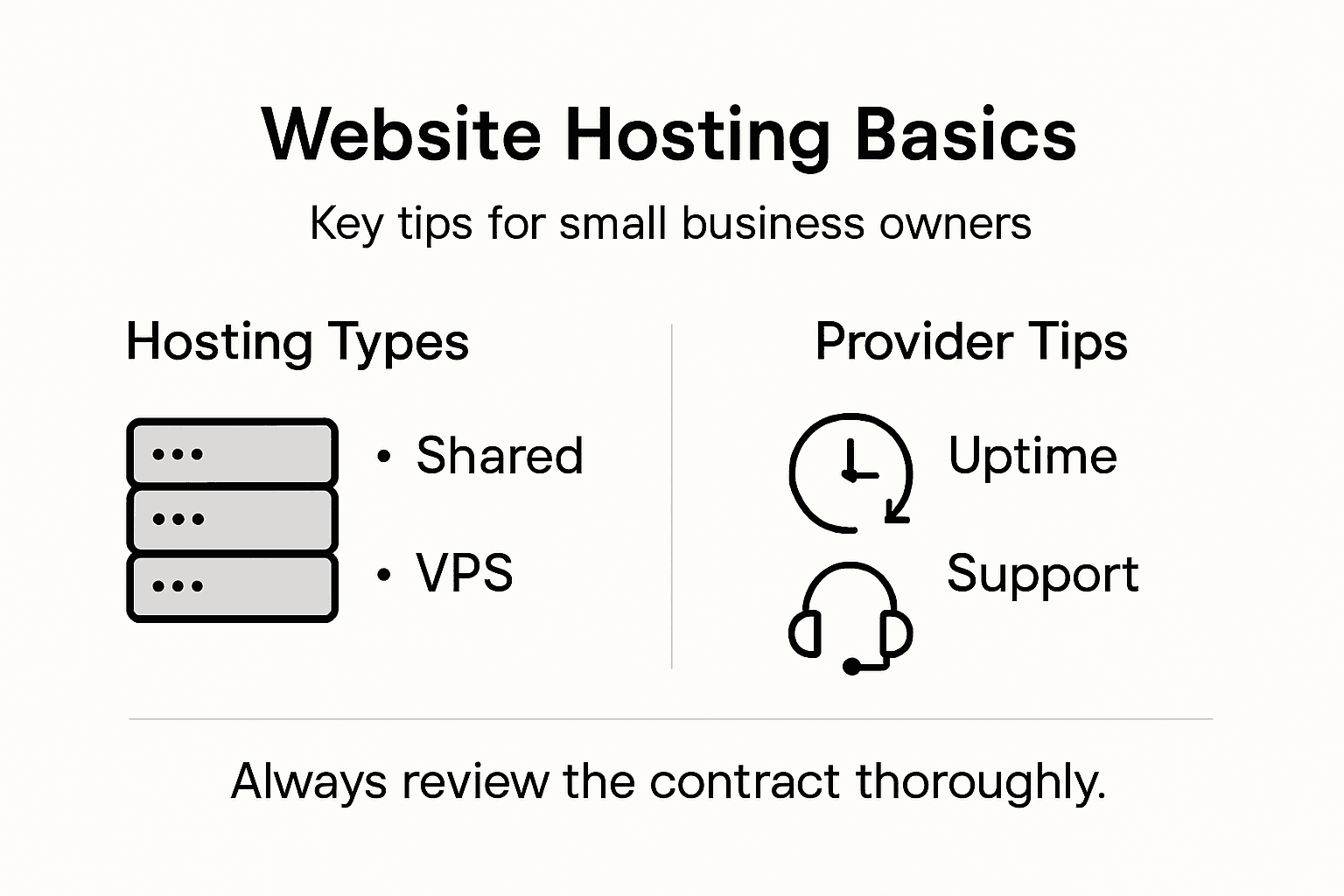
Use this summary table to check critical hosting provider qualities before committing:
| Assessment Area | What to Look For | Business Benefit |
|---|---|---|
| Uptime | 99.9%+ guarantee | Reliable access for customers |
| Support | Multiple contact methods | Faster issue resolution |
| Security | Malware scanning, SSL | Protect business reputation |
| Scalability | Easy upgrades | Seamless growth as needs change |
Not all hosting providers are created equal - your choice can make or break your online business presence.
Consider requesting trial periods or short-term contracts that allow you to test the provider's performance without a long-term commitment. Many reputable hosts offer money-back guarantees that can help mitigate initial risks.
Step 4: Review Costs and Contract Terms Carefully
Navigating web hosting contracts requires careful attention to detail. Understanding the financial and legal implications of your hosting agreement can save your small business from unexpected expenses and service disruptions.
When reviewing potential hosting contracts, focus on these critical financial considerations:
- Pricing structure: Monthly versus annual rates
- Hidden fees: Setup costs, domain registration, SSL certificates
- Renewal pricing: Potential rate increases after initial term
- Cancellation terms: Early termination fees and exit conditions
- Prorated refunds: Policies for unused service time
- Bandwidth overage charges: Potential extra costs for traffic spikes
Small businesses should request a comprehensive breakdown of all potential expenses. Don't assume the advertised price represents your total cost - dig into the details and ask specific questions about what is and isn't included in the base rate.
A seemingly cheap hosting plan can become expensive when you factor in all the additional charges.
Pay special attention to contract length, automatic renewal clauses, and service level agreements. Some providers lock you into long-term contracts with penalties for early cancellation, while others offer more flexible month-to-month options.
Step 5: Test Website Performance and Support Response
Before finalizing your web hosting decision, it's crucial to thoroughly evaluate the performance and responsiveness of potential providers. Your website's speed and reliability can directly impact user experience and your business's online success.
Web performance metrics are critical indicators of hosting quality. Small businesses should conduct comprehensive testing to ensure their hosting meets expected standards:
- Load time: Measure website speed under different traffic conditions
- Response time: Test support team's reaction to technical issues
- Uptime reliability: Verify consistent website availability
- Scalability: Check how the hosting handles traffic spikes
- Customer support: Evaluate communication speed and technical expertise
Utilize multiple testing approaches to get a comprehensive view. This might include performance monitoring tools, simulated traffic tests, and direct support interactions to assess the provider's real-world capabilities.
A few hours of thorough testing can save you months of potential headaches and lost business opportunities.
Consider creating a structured testing plan that simulates your actual business website requirements. This approach helps you understand how the hosting provider will perform under your specific conditions.
Simplify Your Small Business Website Hosting Journey Today
Choosing the right website hosting can feel overwhelming with so many options and technical details to weigh like uptime guarantees, scalability, and support responsiveness. If you are struggling to define clear website goals or to navigate the complexities of hosting contracts and performance testing, you are not alone. These challenges often lead to frustration and costly delays in launching or growing your online presence.
Vegas Solutions understands these pain points and offers a turnkey solution that removes the tech headaches for small businesses and self-employed professionals. We handle everything from building and hosting to ongoing website maintenance. With one point of contact and simple language, you can focus on your business while enjoying fast turnaround and reliable support. You can even start with a $69 demo and only continue if it feels like a good fit.

Stop worrying about technical jargon or hidden fees and start experiencing stress-free web hosting that aligns with your business goals. Visit Vegas Solutions now to learn how easy your online presence can be. Explore how we build and manage websites tailored for small businesses and enjoy hosting without surprises or downtime. Take the first step toward a powerful online platform designed to grow with you by visiting Vegas Solutions today.