
How to Simplify Website Management for Creatives

Juggling client projects and creative deadlines in the United States often leaves little room for tangled website headaches. For many self-employed professionals, a website is more than just an online business card—it is your main avenue to attract new work and showcase your talent. With user-friendly platforms now offering all-in-one website management without technical barriers, you can focus on your creative career while building a powerful and professional online presence.
Step 1: Define Your Website Goals and Requirements
Building a successful website starts with crystal-clear goals that align with your creative business vision. Understanding your website's core purpose helps you create a digital platform that genuinely serves your professional needs and attracts your ideal clients.
To effectively define your website objectives, think about your specific requirements through the lens of three key categories:
- Informational goals: Showcasing your portfolio, skills, and professional background
- Marketing goals: Generating leads, attracting potential clients, and establishing your brand
- Conversion goals: Booking consultations, selling services, or directing inquiries
A strategic approach involves setting SMART goals that transform vague aspirations into actionable targets. Your objectives should be Specific (clearly defined), Measurable (trackable), Achievable (realistic), Relevant (aligned with your business), and Time-bound (with clear deadlines).
Here's how SMART goals characteristics guide creative website planning:
| SMART Element | What It Means | Impact on Website Development |
|---|---|---|
| Specific | Clearly defined objectives | Focuses design and content decisions |
| Measurable | Progress can be tracked | Enables performance evaluation |
| Achievable | Realistic and attainable goals | Prevents overextension and frustration |
| Relevant | Aligned with business needs | Ensures audience engagement and brand consistency |
| Time-bound | Set deadlines for completion | Encourages timely project launches |
Your website isn't just a digital business card. It's a powerful tool that represents your professional identity and drives your creative career forward.
Consider practical questions that help crystallize your website's purpose:
- Who is my target audience?
- What specific actions do I want visitors to take?
- How will my website differentiate me from other professionals in my field?
Step 2: Select a Reliable All-In-One Website Provider
Choosing the right website provider is crucial for creatives who want a hassle-free digital presence. Your goal is to find a platform that simplifies technical complexities while giving you the flexibility to showcase your unique professional brand.
When exploring all-in-one website builders, focus on platforms that offer integrated solutions. These comprehensive services typically include:
- Website hosting
- Domain registration
- Design tools and templates
- SEO optimization features
- Security and maintenance support
- Customer service
The right website provider transforms technical challenges into opportunities for creative expression.
Consider these practical steps when selecting your provider:
- Assess your specific creative business needs
- Compare pricing and feature packages
- Check template and design flexibility
- Review customer support options
- Verify potential for future growth
Step 3: Set Up Your Site With User-Friendly Tools
Now that you've chosen your website provider, it's time to transform your digital vision into reality. Setting up your website should feel like an exciting creative process, not a technical nightmare.

Start by exploring platforms with intuitive website builders that offer drag-and-drop functionality and pre-designed templates. These user-friendly tools are designed to help creatives like you build professional websites without coding knowledge.
Key features to look for in your site-building toolkit include:
- Drag-and-drop page editors
- Customizable professional templates
- Mobile-responsive design options
- Integrated SEO tools
- Simple media upload capabilities
- Widgets for additional functionality
Your website is your digital portfolio. Make it as unique and compelling as your creative work.
Follow these strategic steps to set up your site:
- Select a clean, professional template matching your aesthetic
- Customize color schemes and fonts
- Upload high-quality portfolio images
- Write clear, engaging content sections
- Optimize for mobile viewing
Step 4: Delegate Hosting, Maintenance, and Support
As a creative professional, your time is your most valuable asset. Instead of getting bogged down in technical website management, consider delegating website hosting and maintenance to specialists who can handle the complex backend work.
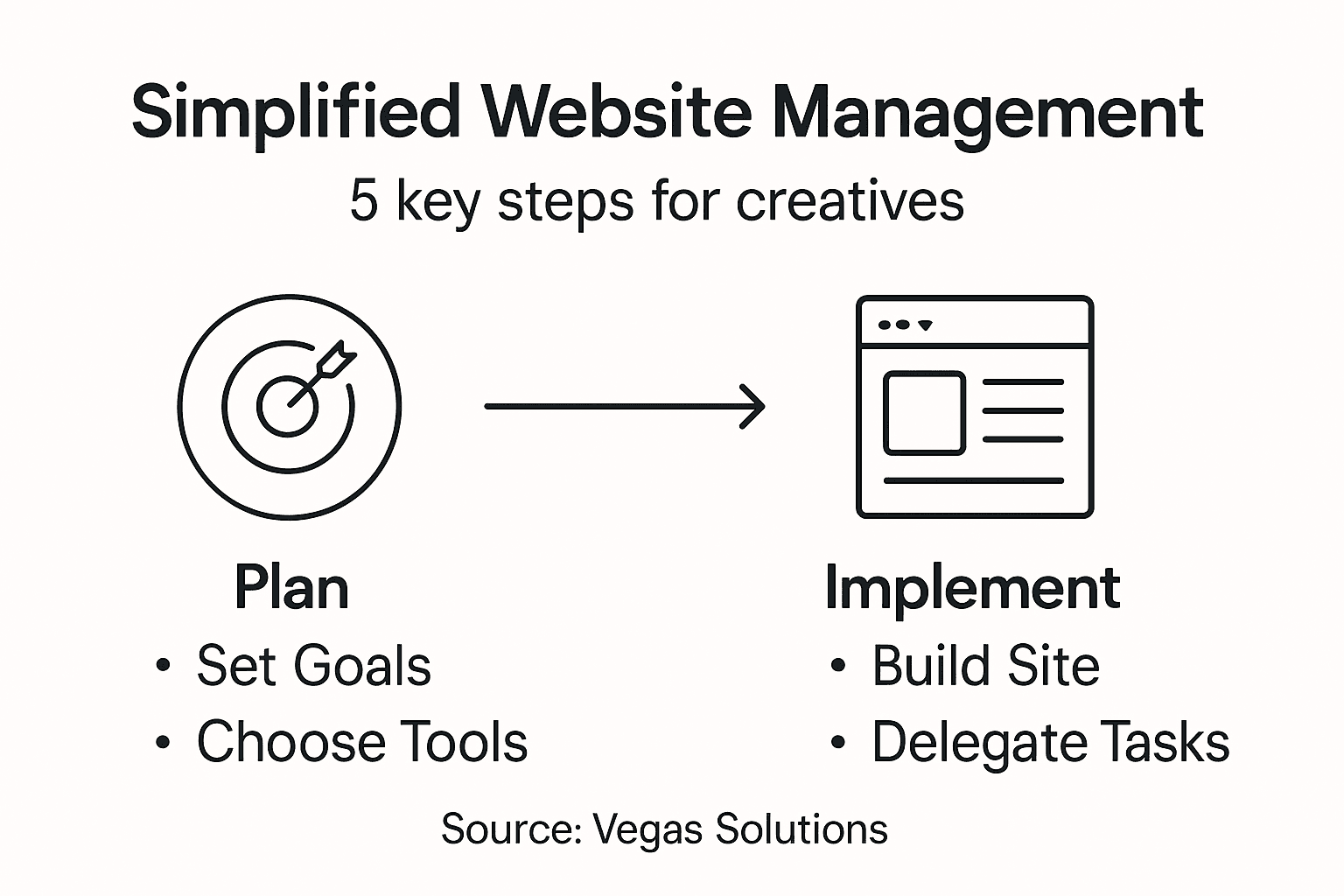
By outsourcing your website's technical needs, you free up crucial time to focus on your creative work and business growth. A comprehensive managed hosting service typically provides:
Compare core differences between self-managed and fully managed website hosting:
| Hosting Type | User Responsibilities | Benefit to Creatives |
|---|---|---|
| Self-managed | Software updates, backups, security | Total control, but time-consuming |
| Managed | Provider handles all maintenance | Focus on creative work, less tech hassle |
- Regular software updates
- Advanced security monitoring
- Automatic backup systems
- Performance optimization
- Rapid technical support
- Ongoing site health checks
Your website should work for you, not the other way around. Let experts handle the technical details while you concentrate on your craft.
When selecting a support team, consider these critical evaluation steps:
- Review their technical expertise
- Check response time guarantees
- Understand their security protocols
- Verify backup and recovery processes
- Confirm transparent communication channels
Step 5: Verify Performance and Ongoing Ease of Use
Your website is a living digital platform that requires consistent monitoring and evaluation. By implementing strategic website performance checks, you can ensure your online presence remains professional, functional, and aligned with your creative business goals.
Regular performance verification involves tracking multiple critical metrics and user experience factors. Pay close attention to these key evaluation areas:
- Website loading speed
- Mobile responsiveness
- User navigation ease
- Content accuracy and freshness
- Security protocols
- Search engine optimization
Your website should be a smooth, intuitive gateway that effortlessly showcases your professional brand.
Implement a comprehensive performance review process:
- Run monthly speed and functionality tests
- Review website analytics
- Check mobile device compatibility
- Test all interactive elements
- Validate content relevance
Simplify Your Website Management and Focus on What You Love
Managing a website can feel overwhelming, especially when technical tasks pull you away from your creative work. This article highlights the challenge of balancing website hosting, maintenance, and performance checks while striving to present a professional digital portfolio. If you want to avoid the frustration of managing updates, security, and backups on your own, there is a better way.
Discover how Vegas Solutions removes your website headaches by handling everything for you. From building your site with user-friendly designs to providing ongoing support and managed hosting, we give you one point of contact and clear communication without technical jargon. Start with a $69 demo and experience hassle-free website management built for creatives who want to focus on their craft. Ready to simplify your online presence and grow your creative business? Visit Vegas Solutions to get started now.