
Professional Site Design: Impact on Small Businesses

Choosing the right website design often feels confusing when you just want your business to shine online. Many American small business owners think a polished look is enough, but great site design is about much more. Balancing easy navigation, reliable performance, and a clear focus on your customer can give your company a true edge. Discover how professional site design combines visual appeal with strategic function to turn website visitors into loyal customers.
Defining Professional Site Design and Common Misconceptions
Professional site design represents far more than simply creating an attractive visual interface. It involves strategic problem-solving and a deep understanding of user experience that goes well beyond surface-level aesthetics. Scholarly research on web design practices reveals that effective websites require sophisticated knowledge and intentional design thinking.
Many small business owners mistakenly believe professional site design is just about making something look good. However, true professional design involves multiple critical components:
- Understanding target audience behaviors
- Creating intuitive navigation pathways
- Ensuring responsive performance across devices
- Optimizing for search engine visibility
- Implementing strategic visual hierarchies
User experience remains the cornerstone of professional site design. Design thinking research emphasizes that successful websites are not created through guesswork, but through systematic understanding of user needs and behaviors.
Professional designers approach website creation as a holistic process that balances technical functionality, visual communication, and user psychology. They use data-driven strategies to create digital experiences that not only look professional but also effectively convert visitors into customers.
Types of Professional Site Design for Small Businesses
Small businesses have several strategic website design approaches to choose from, each tailored to specific business goals and target audiences. Small business web design research highlights the importance of selecting a design type that effectively communicates brand identity and meets customer expectations.
The primary types of professional site design for small businesses include:
- Brochure Websites: Simple, static sites that provide basic company information
- E-commerce Websites: Online stores with integrated shopping cart functionality
- Service-based Websites: Designed to showcase professional services and expertise
- Portfolio Websites: Highlighting past work and professional achievements
- Booking/Appointment Websites: Enabling direct online scheduling
Responsive design has become a critical component across all website types. Modern small business websites must perform seamlessly across desktop, tablet, and mobile devices, ensuring potential customers can access information regardless of their preferred technology.
Each design type requires careful consideration of user experience, visual hierarchy, and strategic content placement. Successful small business websites go beyond mere aesthetics, creating intuitive digital experiences that guide visitors toward desired actions like making contact, scheduling a consultation, or making a purchase.
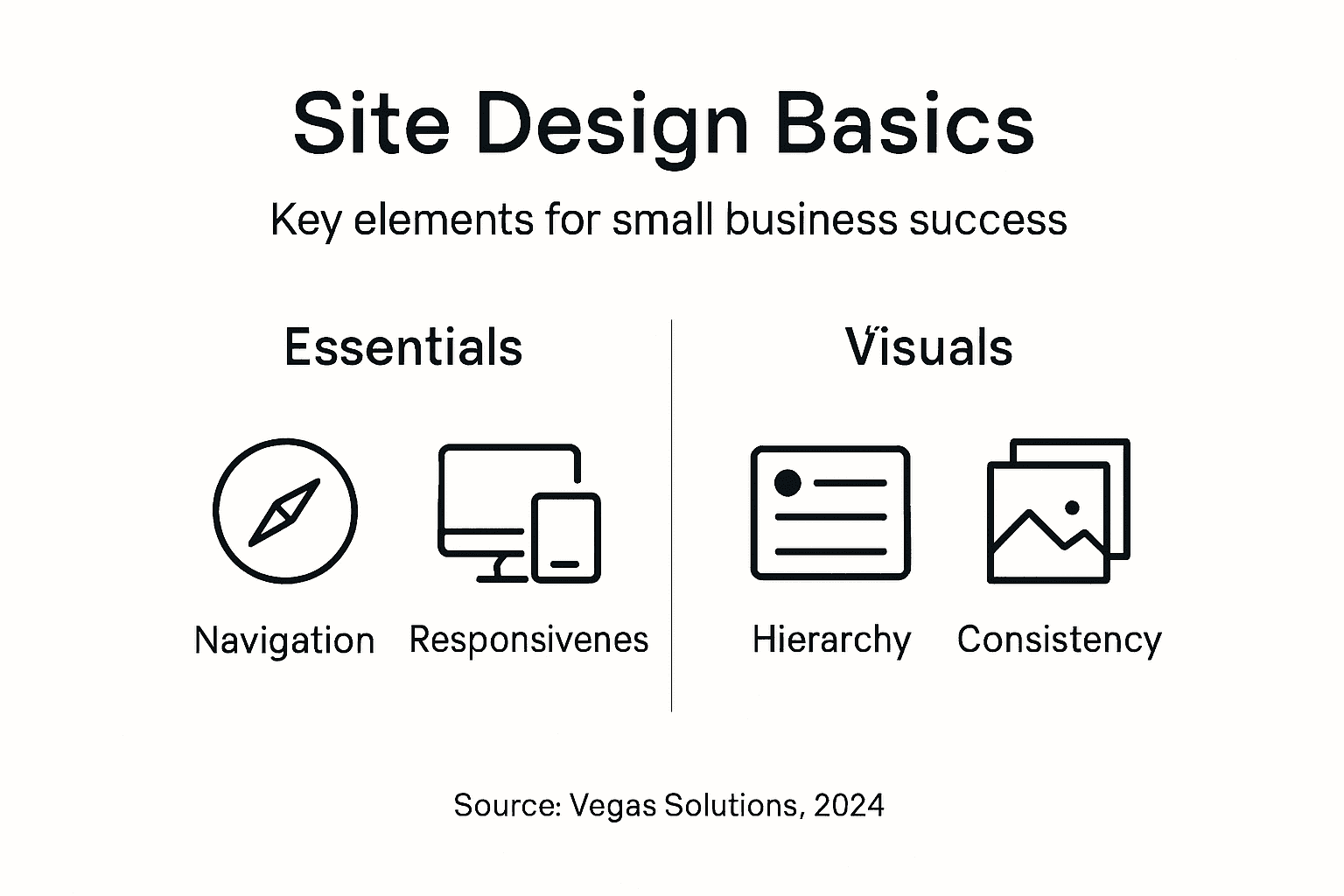
Here's how common site types align with business goals:
| Site Type | Primary Purpose | Best For |
|---|---|---|
| Brochure Website | Share company information | Local service providers |
| E-commerce Website | Sell products online | Retail shops |
| Service Website | Showcase services | Consultants, agencies |
| Portfolio Website | Display past work | Designers, freelancers |
| Booking Website | Enable scheduling | Salons, clinics |
Essential Features of Successful Site Design
Building a successful website requires careful integration of multiple strategic elements that work together to create an exceptional user experience. Comprehensive web development research highlights the critical features that transform an ordinary website into a powerful business tool.
The key essential features of successful site design include:
- User-Friendly Navigation: Clear, intuitive menu structures
- Responsive Design: Seamless performance across all devices
- Fast Loading Speeds: Minimal wait times for page content
- Clear Calls-to-Action: Strategically placed conversion prompts
- High-Quality Content: Relevant, engaging, and informative text
- SEO Optimization: Technical elements that improve search visibility
Visual hierarchy plays a crucial role in guiding user attention and creating an engaging digital experience. Design element research emphasizes the importance of strategically arranging visual components to direct user interactions and support core business objectives.

Successful website design goes beyond aesthetic appeal, focusing on creating functional digital experiences that solve user problems and streamline information access. Small businesses must prioritize websites that not only look professional but also provide immediate value to potential customers.
The Site Design Process Step by Step
Developing a professional website requires a systematic approach that transforms initial concepts into a functional digital platform. Small business owners must understand the strategic steps involved in creating an effective online presence that represents their brand and engages potential customers.
The comprehensive site design process typically involves these key stages:
-
Discovery and Research Phase
- Identify business objectives
- Define target audience
- Analyze competitor websites
- Establish project scope and requirements
-
Planning and Strategy
- Create initial site architecture
- Develop content strategy
- Outline key pages and user journeys
- Determine technical specifications
-
Design Development
- Create wireframes
- Develop visual design concepts
- Select color palette and typography
- Design responsive layout mockups
-
Content Creation
- Write compelling website copy
- Develop engaging visual content
- Optimize text for SEO
- Prepare multimedia elements
-
Technical Implementation
- Build website structure
- Integrate responsive design
- Implement SEO best practices
- Ensure cross-device compatibility
Website architecture forms the critical backbone of successful site design, determining how users navigate and interact with digital content. Each stage requires careful consideration and strategic planning to create a website that not only looks professional but effectively supports business goals.
Successful site design is an iterative process that demands continuous refinement. Small businesses should view their website as a dynamic tool that evolves with their brand, requiring periodic updates and optimization to maintain relevance and performance.
Costs, Risks, and Common Pitfalls to Avoid
Small business website development involves navigating complex financial and technical challenges that can significantly impact overall project success. Understanding potential risks and strategic cost management approaches is crucial for creating a website that delivers value without breaking the bank.
Common financial and strategic risks include:
- Unexpected Development Costs: Hidden fees and scope creep
- Poor Technical Compatibility: Websites that don't work across devices
- Inadequate Security Measures: Vulnerability to cyber threats
- Ineffective Design Choices: Layouts that repel potential customers
- Lack of Scalability: Websites unable to grow with the business
Budget allocation requires careful consideration of both immediate needs and long-term digital strategy. Small businesses must balance investment in professional design with practical financial constraints, recognizing that a website is a critical business asset requiring ongoing maintenance and potential future upgrades.
The most frequent pitfalls small businesses encounter involve underestimating the complexity of website development. Many entrepreneurs mistakenly view websites as one-time expenses, failing to budget for regular updates, security patches, and technological evolution. This shortsighted approach can lead to outdated, underperforming digital platforms that ultimately harm business credibility.
Below is a summary of the most frequent risks and solutions in small business web design:
| Common Risk | Impact on Business | How to Address |
|---|---|---|
| Unexpected costs | Budget overruns | Set clear project scope |
| Technical incompatibility | Poor user experience | Test across all devices |
| Weak security | Data loss or breaches | Use secure hosting, updates |
| Outdated design | Lower credibility | Schedule regular reviews |
| Lack of scalability | Limits future growth | Plan for expansion early |
Transform Your Small Business Website Without the Tech Headaches
The article highlights that professional site design is much more than just good looks. It tackles challenges like creating intuitive navigation, ensuring responsive design, and integrating clear calls to action—all crucial for turning visitors into customers. If you feel overwhelmed balancing these strategic design elements on your own or worry about hidden costs and ongoing maintenance, you are not alone. Vegas Solutions understands these pain points and offers a complete solution tailored for small businesses and self-employed professionals who want to focus on their core business instead of technical complexities.
Our team handles everything from building to hosting and maintaining your website with a simple process and clear communication. Experience fast turnaround times, ongoing support, and no confusing jargon. Start with a refundable $69 demo to see how professional site design can elevate your business without the risk or stress.
Ready to stop guessing and start growing? Discover how Vegas Solutions makes professional site design easy with proven expertise on Vegas Solutions. Take control of your digital presence today by visiting Vegas Solutions and let us deliver a user-friendly, responsive, and secure website that truly works for your business.