

Finding new clients often feels like a guessing game for many American service business owners. You know people are searching online for help in your city, but your website rarely gets noticed. The difference between showing up and blending in is mastering SEO for service businesses. This guide breaks down the most effective strategies step by step, so you can attract local clients and grow your online visibility without needing any technical expertise.
Table of Contents
- SEO For Service Businesses Explained Clearly
- Types Of SEO And Their Key Features
- How Local SEO Drives Client Growth
- Content Marketing And Website Optimization Essentials
- Common SEO Mistakes Service Businesses Should Avoid
Key Takeaways
| Point | Details |
|---|---|
| Optimize for Local Search | Service businesses should focus on local SEO strategies to increase visibility in their geographical area and attract immediate clients. |
| Balanced SEO Approaches | Utilize a combination of on-page, off-page, and technical SEO to enhance your website's ranking and searchability. |
| Content Is King | Create valuable, informative content that directly addresses real client questions while naturally incorporating relevant keywords. |
| Track and Adjust Strategies | Continuously measure the performance of your SEO efforts and be ready to adapt strategies based on what is effectively driving inquiries. |
SEO for Service Businesses Explained Clearly
SEO (Search Engine Optimization) is the process of making your website more visible to people searching online for services you offer. Instead of paying for every click with ads, SEO helps potential clients find you naturally when they search for solutions you provide. For service businesses, this is different from selling physical products—you're connecting with people who actively need your specific services right now.
Think about how you search when you need a plumber, electrician, accountant, or marketing consultant. You type something like "plumber near me" or "best accountant in [your city]" into Google. That's where SEO matters. When your website appears at the top of those search results, customers are more likely to click on you instead of your competitors. This happens because you've optimized your website to match what people are actually searching for.
How SEO Works for Service Businesses
Search engine optimization involves understanding what potential clients search for and making sure your website shows up for those searches. The process includes several connected parts:
- Keyword research: Finding the specific phrases people use when searching for your services ("roof repair contractor" instead of just "roofing")
- On-page optimization: Putting those keywords naturally on your website pages, in headings, and in your content
- Off-page optimization: Building your online reputation through client reviews, local business listings, and mentions across the web
- Technical SEO: Making sure your website loads fast, works on mobile phones, and is structured in a way search engines can easily understand
- Analytics tracking: Measuring which searches bring people to your site and where they go once they arrive
For a service business, this approach works because you're not trying to rank for thousands of products—you're targeting specific services in specific locations. A home cleaning service in Phoenix has different SEO priorities than one in Dallas, which makes local optimization especially powerful for service providers.
When customers search for your service type in your area, appearing at the top of search results often means winning their business before they even know who you are.
Why SEO Matters More Than You Think
Good SEO practices improve visibility and attract quality traffic by aligning your content with how people actually search. Unlike ads that stop appearing the moment you stop paying, SEO builds long-term visibility. Once you rank well, you continue attracting clients month after month without constantly paying for clicks.
Consider the real impact: if you're a service business spending $500 monthly on ads to get 20 phone calls, but SEO could eventually bring you 30 calls from organic search without that ad cost, the difference becomes significant over a year. That's not to say you abandon ads completely, but SEO creates a foundation that paid advertising complements rather than replaces.
Most service businesses lack the technical skills to handle SEO themselves—and that's okay. What matters is understanding that SEO is about connecting real people searching for real solutions with your business. When someone searches for exactly what you do in your location, they're actively ready to hire. SEO puts your business in front of them at that critical moment.
Pro tip: Start by listing 10-15 specific phrases your ideal clients actually use when searching for your services, including your location or service area, then focus your initial SEO efforts on ranking for those exact phrases.
Types of SEO and Their Key Features
Effective SEO isn't one single strategy—it's actually three interconnected approaches working together. Think of it like maintaining a car: you need to keep the engine running smoothly, make sure the exterior looks good, and ensure people know about your vehicle. For service businesses, understanding these three types helps you see where your efforts should go and why each one matters.
The three main types of SEO are on-page SEO, off-page SEO, and technical SEO. Each type plays a complementary role in improving search engine ranking for service businesses. Rather than choosing one over the others, successful service businesses use all three. They work together to convince search engines that your website deserves to rank highly for the services you offer.
Here's how the three types of SEO align their primary focus and impact for service businesses:
| SEO Type | Main Focus | Typical Impact |
|---|---|---|
| On-Page SEO | Content and page elements | Ensures keyword relevance |
| Off-Page SEO | Reputation and external signals | Builds website trust and authority |
| Technical SEO | Website performance and structure | Improves crawlability and rankings |
On-Page SEO: What's Actually on Your Website
On-page SEO focuses on optimizing the content and HTML elements on individual pages of your website. This is the most hands-on type and the one where you have the most direct control. When a potential client searches for "tax accountant in Denver," on-page SEO makes sure that phrase appears in your page title, headings, and content so Google understands what your page is about.
Here's what on-page SEO includes:
- Page titles and headings: The title that appears in browser tabs and search results should clearly state what your service is
- Content quality: Your actual words need to answer the questions potential clients are asking and include the keywords they search for
- Meta descriptions: The brief summary under your page title in search results should encourage people to click
- Internal links: Connecting related pages on your website helps search engines understand your site structure
- Image optimization: Adding descriptive text to images helps both search engines and accessibility
For a service business, on-page SEO means writing content that actual humans find helpful while naturally including the phrases they search for. A plumbing service might create a page about "emergency pipe repair" that actually teaches homeowners what to do before the plumber arrives. That content serves real people while also matching what they search for.

Off-Page SEO: Your Reputation Beyond Your Website
Off-page SEO involves signals outside your website that prove your business is trustworthy and valued. The main component is backlinks—other websites linking to yours. When another website references your business as an authority, search engines take that as a vote of confidence.
Off-page SEO tactics include:
- Local business listings: Being listed on Google Business Profile, Yelp, and industry directories
- Client reviews: Positive reviews on Google, Facebook, and industry-specific sites build trust
- Social media engagement: Activity on platforms where potential clients spend time
- Mentions in local news or industry publications: Coverage that mentions your business
- Partnerships and associations: Being listed on partner websites or industry association sites
For service businesses, off-page SEO often involves backlink building and social media engagement to establish credibility. A well-reviewed contractor with a complete Google Business Profile and mentions in local business directories sends strong signals to search engines. These external signals tell Google that real customers trust your business.
Your reputation across the web matters as much as what's on your website itself. Search engines reward businesses that other trusted sources vouch for.
Technical SEO: Under-the-Hood Performance
Technical SEO addresses how your website functions behind the scenes. This includes things like site speed, mobile-friendliness, how easily search engines can crawl and index your pages, and the overall structure of your website code. While you might not write this code yourself, you need to ensure your website has it.
Key technical SEO elements include:
- Site speed: Pages that load in under 3 seconds rank better than slow sites
- Mobile optimization: More people search on phones than computers, so your site must work perfectly on mobile
- XML sitemaps: A file that helps search engines understand all the pages on your site
- HTTPS security: Websites with secure connections rank higher than unsecured ones
- Structured data: Code that helps search engines understand what your content is about
These are reasons many service business owners benefit from professional help managing their websites. A properly structured website that loads fast and works on mobile devices gives you a technical foundation that SEO can build upon. You can't rank well if your website is slow or doesn't work on phones, regardless of your content quality.
Pro tip: Start by improving on-page SEO since it's where you have the most control, then layer in off-page efforts like getting listed in local directories and asking satisfied clients to leave reviews.
How Local SEO Drives Client Growth
Local SEO is where service businesses see the most immediate and measurable results. Unlike broader SEO strategies that might take months to show results, local SEO puts your business in front of people actively searching for your specific services in your geographic area right now. When someone searches "plumber near me" or "best dentist in [your city]," local SEO determines whether they find you or your competitor.
For service businesses, geography is everything. You cannot serve clients in Los Angeles from your office in Phoenix, so ranking nationwide is pointless. What matters is dominating search results in your service area. Local SEO involves optimizing online presence so that service businesses appear prominently when customers search for services in their geographic area. This targeted approach means you attract qualified clients who are geographically close enough to actually hire you.
The Core Elements of Local SEO
Local SEO success depends on three interconnected elements working together. Your Google My Business profile is your foundation—it's the information card that appears when someone searches for your service type in your area. Your local citations are your supporting players—these are mentions of your business name, address, and phone number across directories and websites. And your local reviews are your reputation builder—they prove to both customers and search engines that people trust your business.
Here's what you need to focus on:
- Google My Business optimization: Complete profile with accurate address, phone number, hours, categories, and regular posts
- Location-specific pages: If you serve multiple cities, create separate pages for each location
- Local keyword targeting: Using phrases like "[service] in [city]" throughout your website content
- "Near me" search optimization: Ensuring your website appears when people search "[service] near me"
- Local citations: Being listed consistently across directories like Yelp, Apple Maps, local Chamber of Commerce sites
Many service business owners don't realize how important consistent information is across all these places. If your phone number is different on your website versus your Google My Business profile versus Yelp, search engines get confused about which is correct. This inconsistency actually hurts your rankings.
How Reviews Drive Growth
Online reviews are one of the most powerful local SEO tools available. Effective local SEO includes Google My Business profile optimization, local keyword targeting, and online reviews that drive more inquiries from potential clients. When potential clients see a business with 47 five-star reviews versus one with 3 reviews, they click the highly-reviewed business almost every time.
From a search engine perspective, reviews signal that your business is real and that actual customers are satisfied. Google rewards businesses with numerous positive reviews by ranking them higher in local search results. This creates a powerful cycle: better ranking brings more visibility, more visibility brings more customers, more customers bring more reviews, and more reviews improve your ranking further.
The key is actually asking satisfied clients to leave reviews. Most people won't do it unprompted. Send a simple text or email after you complete a job asking clients to share their experience on Google or Yelp. Make it easy by including a direct link. Over time, this builds the social proof that both attracts customers and helps you rank higher.
Businesses with 40 or more reviews typically outrank competitors with fewer reviews, regardless of how good their content is.
Building Your Local Presence Beyond Google
While Google My Business is critical, your local SEO effort extends to other directories and platforms where potential clients search. Industry-specific directories matter too. An electrician needs to be listed on electrical contractor directories, not just Google and Yelp. A therapist needs presence on mental health directories alongside general business listings.
Your presence across these platforms needs consistency:
- Audit current listings: Search your business name to find where you're already listed
- Update existing profiles: Ensure name, phone, address, and description are identical everywhere
- Add missing listings: Claim profiles on major platforms (Google, Yelp, Apple Maps, Facebook)
- Add industry-specific directories: Research directories relevant to your specific service type
- Monitor for accuracy: Set calendar reminders to check these listings quarterly for accuracy
This might seem tedious, but consistency across directories is how search engines verify that you're a legitimate, established business. A service business with accurate information across 15 different platforms ranks higher than one that only appears on Google.
Pro tip: Create a simple spreadsheet listing all directories where your business should be listed, then assign each month to update one or two of them—this makes the task manageable rather than overwhelming.
Content Marketing and Website Optimization Essentials
Content is how you convince potential clients that you know what you're doing. When someone is searching for a service, they're not just looking for a business to call—they're looking for proof that you understand their problem and can solve it. Your website content needs to educate, reassure, and demonstrate expertise all at once. This is where content marketing becomes your most valuable SEO tool.
Content marketing means creating helpful, relevant information that attracts potential clients to your business. Unlike advertising that interrupts people, good content answers questions they're already asking. A tax accountant might write articles about tax deductions for small business owners. A plumber might create guides about what causes common pipe problems. This content doesn't directly sell, but it builds trust and proves you're an expert.
Why Content Strategy Matters
Content marketing effectiveness hinges on creating content aligned with organizational strategy, audience needs, and quality standards. Without strategy, you might create lots of content that nobody reads. With strategy, every piece of content serves a purpose.
Your content strategy should answer these questions:
- Who are your ideal clients? What are their biggest pain points and questions?
- What content topics would help them? What information do they search for online?
- What format works best? Blog articles, videos, guides, checklists, or something else?
- How often will you publish? Consistency matters more than frequency.
- How will you measure success? Which pages bring the most qualified leads?
A real strategy prevents the common mistake of writing random blog posts whenever you have time. Instead, you create a plan where each piece of content targets specific keywords and addresses specific client concerns. An electrician might create content about electrical safety, upgrading home electrical systems, and recognizing when you need an electrician—topics that directly address what potential clients are searching for.
Creating Content That Ranks and Converts
Content marketing involves creating and distributing relevant, valuable content to attract and retain customers through high-quality writing and SEO optimization. Your content needs to work twice: it needs to rank in search results, and it needs to convince readers to contact you.
These are the elements that make content work:
- Answer real questions: Write about what potential clients actually wonder about, not what you think they should know
- Use natural language: Write like you're explaining to a friend, then naturally include the keywords people search for
- Structure for scanning: Use headings, short paragraphs, and bullet points so readers can quickly find what they need
- Show expertise: Include specific details, examples, and recommendations that prove you know your field
- Include calls-to-action: Tell readers what to do next—contact you, schedule a call, request a quote
For example, a home inspector might write "10 Things Home Buyers Always Ask About" rather than "Home Inspection Overview." The first answers actual questions potential clients have. The second is generic and boring.
Website optimization goes hand-in-hand with content creation. Your best content means nothing if your website is slow, doesn't work on mobile phones, or is confusing to navigate. These technical elements directly affect both SEO rankings and whether visitors actually contact you.
The best content in the world won't generate leads if your website doesn't clearly show how people should contact you or request your services.
Turning Content Into Client Inquiries
Creating content is only half the battle. The other half is making sure it actually generates business. This means optimizing your website structure so visitors can easily navigate from reading your content to contacting you. It means having clear, visible buttons or forms asking for contact information.
Start with these optimization steps:
- Audit your current content: What pages get the most traffic? Which ones actually generate inquiries?
- Identify gaps: What questions do potential clients ask that you haven't answered yet?
- Create a publishing schedule: Commit to creating one piece of quality content weekly or monthly
- Optimize for mobile: Test that all content reads well on phones, not just computers
- Add clear contact pathways: Every content page should make it obvious how to reach you
Many service businesses create great content but bury their contact information or make it hard to take the next step. Someone might read an excellent article about roof repair, feel confident in your expertise, then leave your site because they can't easily figure out how to get a quote.
Pro tip: Create one comprehensive guide or resource related to your most popular service, optimize it thoroughly for search engines, and use it as your cornerstone content that links to and supports all your other content marketing efforts.
Common SEO Mistakes Service Businesses Should Avoid
Most service business owners don't set out to sabotage their SEO efforts. They simply don't know what mistakes they're making until it's too late. You might spend months creating content or optimizing your website only to discover you've been doing something that actually hurts your rankings. Understanding common pitfalls helps you avoid wasting time and money on strategies that backfire.
Many of these mistakes seem small individually, but they compound over time. A website that loads slowly might lose 10% of visitors. Add poor mobile optimization and you lose another 15%. Throw in confusing navigation and suddenly half your potential clients never even reach your contact page. The good news is that avoiding these mistakes is straightforward once you know what to watch for.
See how common SEO mistakes affect client opportunities and website growth:
| SEO Mistake | Lost Opportunity Example | Long-Term Effect |
|---|---|---|
| Slow site speed | Visitors leave after 3 seconds | Lower rankings and leads |
| Inconsistent business info | Missed calls or confused clients | Poor trust, ranking drops |
| Keyword stuffing | Content feels unnatural | Penalized by search engines |
| No local directory listings | Clients can't find you locally | Less visibility, fewer calls |
The Most Damaging Technical Mistakes
Common SEO mistakes include neglecting keyword research, ignoring on-page SEO elements, poor website structure, slow loading speeds, and lack of mobile optimization. These technical issues directly impact both your search rankings and visitor experience.
The biggest technical mistakes to avoid:
- Slow website speed: If your site takes more than 3 seconds to load, Google ranks it lower and visitors leave. A one-second delay can reduce conversions by 7%.
- Poor mobile experience: Over 60% of searches now happen on phones. If your site doesn't work smoothly on mobile, you're losing most of your potential clients.
- Broken links and missing pages: When links lead to 404 errors or pages don't exist anymore, search engines lose trust in your site.
- No clear site structure: Visitors and search engines should easily understand how your pages relate to each other.
- Missing or incomplete Google My Business profile: For service businesses, this is your most valuable real estate in search results.
These issues are often invisible to you if you only test your website on a fast computer with a good internet connection. Test your site on an actual smartphone with slower internet. Time how long it takes to load. Try clicking around on mobile to see if buttons work properly. What feels fine to you might feel broken to potential clients.
Content and Keyword Mistakes That Hurt Rankings
Content mistakes are equally damaging. Many service business owners either ignore keywords entirely or stuff them awkwardly throughout their content. Both extremes harm your rankings.
SEO beginners often make mistakes such as keyword stuffing, duplicate content, poor site navigation, and not updating content regularly. These content errors confuse search engines about what your pages are actually about.
Avoid these content pitfalls:
- Keyword stuffing: Writing "plumber plumber plumber" to rank for "plumber" looks ridiculous and search engines penalize it. Use keywords naturally, as you'd speak to a client.
- Duplicate content: Having the exact same content on multiple pages confuses search engines about which version to rank. Use unique content on each page.
- Ignoring user intent: Someone searching "how to fix a leaky faucet" wants instructions, not a sales pitch for plumbing services. Answer what they actually search for.
- Neglecting to update old content: Search engines favor fresh content. Update your best-performing pages annually with new information.
- Writing for search engines, not humans: If your content reads like a keyword list instead of helpful advice, potential clients won't trust you.
Your content should answer the actual questions potential clients have, naturally including relevant keywords—never forcing keywords just to manipulate search rankings.
The Strategy Mistakes That Waste Your Time
Beyond technical and content issues, many service businesses make bigger strategic mistakes. They might optimize for the wrong keywords, neglect local SEO entirely, or give up too soon.
Strategic mistakes include:
- Targeting national keywords instead of local ones: "Electrician" gets searched millions of times, but you can't serve clients nationwide. "Electrician in Denver" gets fewer searches but leads to actual clients you can help.
- Ignoring your Google My Business profile: This is where local customers find you. A complete, optimized profile is non-negotiable.
- Not building local citations: Being listed consistently across directories signals to search engines that you're a real, established local business.
- Expecting instant results: SEO typically takes 3-6 months to show meaningful results. Many business owners quit after a few weeks because they haven't seen rankings improve.
- Never measuring what actually works: If you're not tracking which pages bring inquiries, you don't know what's working.
Think of SEO like maintaining a building. You can't just paint the front door once and expect it to stay fresh forever. You need regular maintenance, consistent updates, and a long-term perspective.
Pro tip: Run a website audit using free tools like Google PageSpeed Insights to identify technical issues, then prioritize fixing slow loading speed and mobile problems before optimizing content or keywords.
Elevate Your Service Business with Expert SEO and Hassle-Free Website Support
The article highlights common challenges service businesses face with SEO such as technical headaches, slow site speeds, and local SEO inconsistencies that hold back growth. If you want to avoid keyword stuffing, poor mobile experiences, and confusing website structures while building real trust through local presence and content strategy, you need a partner who handles every detail for you. Vegas Solutions specializes in supporting small businesses and self-employed professionals by providing a fully managed website experience tailored to your unique service and location needs. We take care of on-page SEO essentials, technical performance, ongoing maintenance, and keep your online reputation strong without overwhelming you.
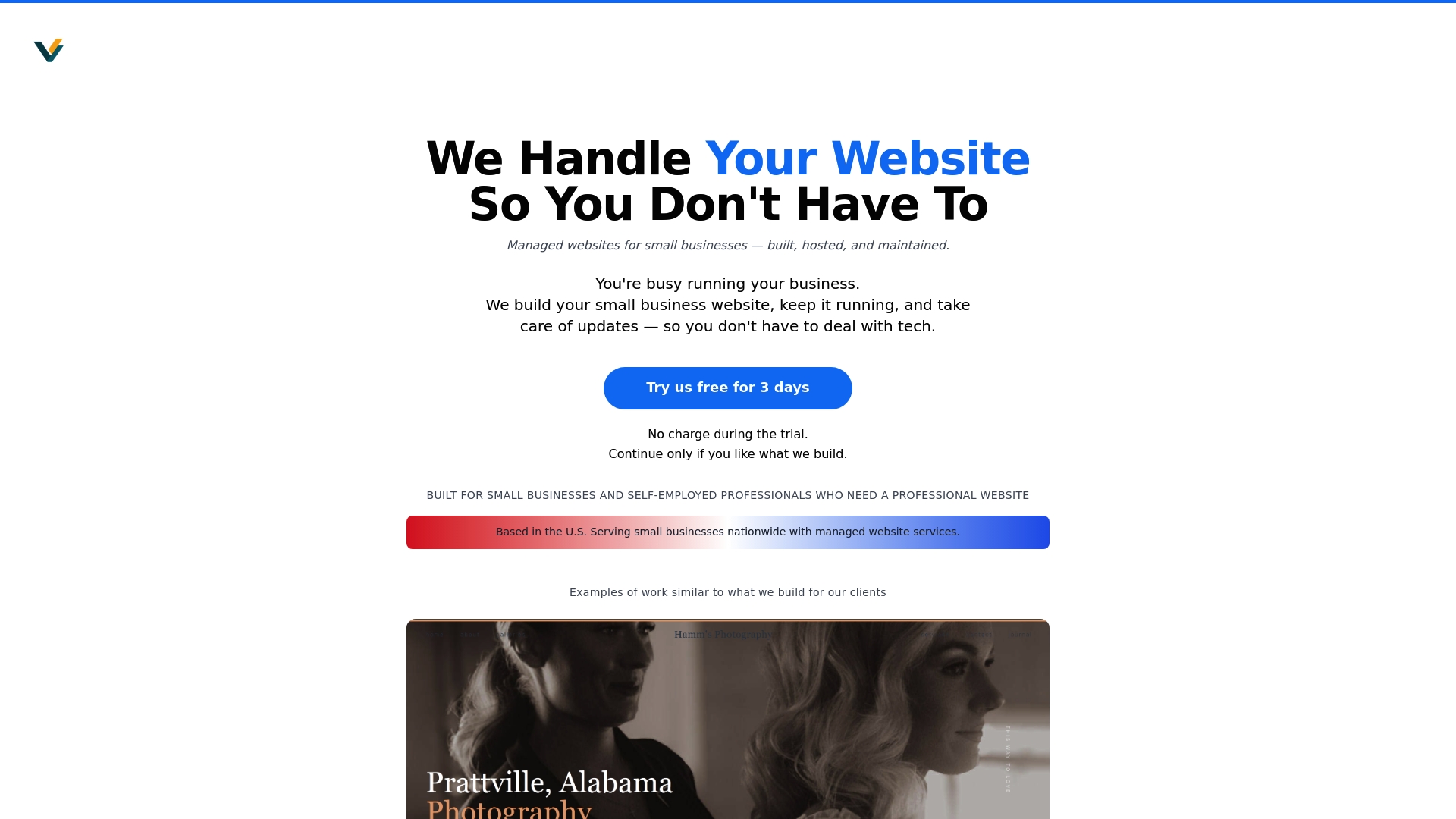
Get your website fully handled with one easy point of contact, simple language, and ongoing support that understands the importance of local SEO and content marketing for service businesses. Start with a no-risk trial at Vegas Solutions and see how we can help you attract more clients organically while removing tech stress. Visit our landing page today and take control of your online growth by letting experts optimize your site right from the start.