Running a business in the United States often means wearing many hats, but your website should not be another source of stress. Every American small business owner needs a hub that welcomes visitors, answers questions, and drives real results even when you are not working. Your website acts as your 24/7 sales and trust-building tool, supporting all your marketing activities and making it easier for customers to choose you over the competition.
Table of Contents
- Defining A Website's Role In Marketing
- Website Types And Essential Features
- Driving Visibility, Leads, And Trust Online
- Common Mistakes And How To Avoid Them
Key Takeaways
| Point | Details |
|---|---|
| Your Website is Essential for Marketing | It serves as a constant sales representative, providing control over your business's online presence and credibility. |
| Regular Updates are Crucial | An abandoned website with outdated content can drive potential customers away more than not having a website at all. |
| Integrate Website with Marketing Efforts | Your website should function as the hub connecting all marketing channels to maximize lead generation and visibility. |
| Focus on User Experience | Fast loading times, mobile responsiveness, and clear calls to action are essential features that convert visitors into customers. |
Defining a Website's Role in Marketing
Your website is your business's always-on sales representative. It works 24/7, answering questions and building trust with potential customers before they ever pick up the phone.
Unlike social media posts that disappear in hours or ads that stop when your budget runs out, your website is a permanent asset you control. It's the one place where customers can learn about your business on their terms, at their own pace.
What a Website Actually Does in Marketing
A website serves multiple critical functions simultaneously. It's not just a digital brochure that sits there looking pretty. Here's what happens behind the scenes:
- Builds credibility: Customers expect you to have a website. Without one, they assume you're not legitimate or not serious about your business.
- Captures leads: Forms, contact buttons, and email signups turn curious visitors into people you can follow up with.
- Generates sales: Some customers buy directly from your site, while others use it to make the decision to hire you.
- Provides information: You control the narrative about what your business website actually is, not Google reviews or competitor claims.
- Supports other marketing: Social media posts link back to your website. Ads send people there. Email campaigns point readers to specific pages.
Your website is the hub where all other marketing channels connect.
The Difference Between Having a Website and Using One Well
Many small business owners build a website then abandon it. Outdated information, broken links, and slow load times scream "this business isn't active." That hurts more than having no website at all.
A working website gets updated, loads fast, and actually converts visitors into customers. The difference is attention and strategy. When your site reflects your current business accurately, customers trust you more.
Your website tells customers whether you're serious about serving them or just going through the motions.
How Your Website Fits Into Modern Marketing
Today's customer journey starts online. Someone searches for your service type, finds you (or doesn't), checks your website, and decides whether to contact you. Your website is often the deciding factor.
This means proper website branding and optimization directly impact whether you win or lose business. A site that looks professional, loads instantly, and clearly explains what you offer wins customers. One that's confusing, slow, or outdated loses them to competitors.

Your website is your first impression, your credibility proof, and your sales tool combined.
Pro tip: Start viewing your website as a working marketing tool, not a one-time project. Regular updates, accurate information, and fast performance turn it into a steady source of qualified leads.
Website Types and Essential Features
Not all websites are built the same way. The right website type depends on what your business actually does and how customers interact with you.
Understanding which type fits your business—and what features make it work—separates websites that generate real results from ones that just sit there looking pretty.
Different Website Types for Different Businesses
Your website type should match your core business model. Different types of websites serve distinct marketing purposes: informational sites, e-commerce platforms, and service-based sites each work differently.
- Brochure websites: Simple sites that present your business, credentials, and contact information. Perfect for consultants, freelancers, and service providers who handle sales through phone calls or meetings.
- E-commerce websites: Built for direct online sales. If you sell products, this is your model. Inventory management, shopping carts, and payment processing are built in.
- Blog and content sites: Designed around publishing articles and building an audience. This works for coaches, agencies, and educators who attract customers through content.
- Service showcase websites: Highlight specific services with pricing, galleries, and booking systems. Common for salons, photographers, and contractors.
Small business owners often start with a brochure website and expand from there.
Below is a quick comparison of common website types and their strategic business purpose:
| Website Type | Best For | Core Goal | Typical Upgrades |
|---|---|---|---|
| Brochure Website | Consultants, freelancers | Build credibility, share basics | Blog, testimonials |
| E-commerce Website | Retailers, product sellers | Drive direct online sales | Live chat, reviews, upsells |
| Blog/Content Site | Agencies, coaches, educators | Grow audience, nurture long-term leads | Email list, gated content |
| Service Showcase | Salons, contractors | Drive bookings, show offerings | Online scheduling, galleries |
The Features Every Website Needs
Regardless of type, certain features matter across the board. These aren't optional extras—they're what separates working websites from broken ones.
Your website must include essential elements like optimized design, mobile responsiveness, and clear calls to action. But there's more.
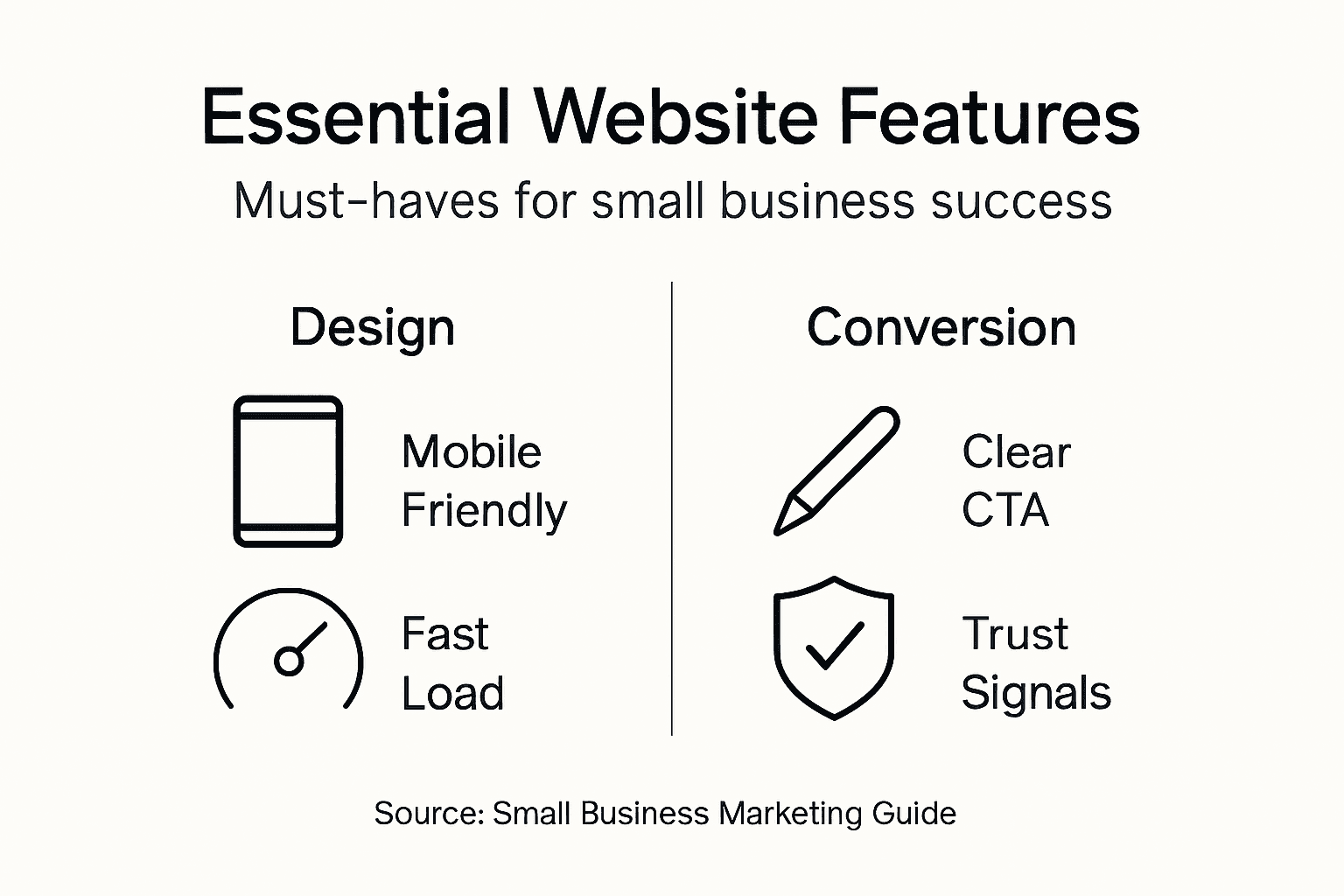
Here's how essential website features impact business growth:
| Feature | Main Benefit | Measurable Result |
|---|---|---|
| Fast Load Times | Reduces bounce rates | More visitors stay on site |
| Mobile Responsiveness | Reaches all device users | Higher mobile conversion rates |
| Trust Signals | Builds instant credibility | Increased contact form submissions |
| Clear Call to Action | Guides next steps | More leads and sales inquiries |
- Fast load times: Slow websites lose visitors instantly. Your pages should load in under 3 seconds or you lose customers.
- Mobile responsiveness: Over 60% of web traffic comes from phones. If your site doesn't work on mobile, you've lost more than half your potential customers.
- Clear navigation: Visitors should find what they need in under 10 seconds. Confusing menus frustrate people into leaving.
- Trust signals: Contact information, business hours, testimonials, and security badges tell visitors you're legitimate.
- Strong calls to action: Tell visitors exactly what to do next: "Call now," "Book a consultation," "Add to cart." Don't make them guess.
Every feature on your website should either build trust, show your value, or move someone closer to buying.
Features That Actually Convert Visitors Into Customers
Many website owners focus on features that look nice but don't generate business. Analytics integration, CRM connections, and email capture systems are the invisible features that do the real work.
Your website should also include contact forms that connect to your email, booking calendars for appointments, and ways to capture visitor information. These features turn casual browsers into leads you can follow up with.
The best websites make it effortless for customers to take the next step with you.
Pro tip: Start with a website type that matches your actual business model, then add only the features that serve your customers. Extra features slow down your site and confuse visitors—focus on what drives your specific business results.
Driving Visibility, Leads, and Trust Online
Your website does three critical jobs at once: it gets found by the right people, turns those people into leads, and convinces them you're trustworthy enough to do business with.
Without visibility, no one sees your site. Without leads, visibility doesn't matter. Without trust, leads don't convert. Your website has to nail all three.
How Your Website Gets Found
Most customers start with a search. They type "plumber near me" or "graphic design services" and your website either shows up or it doesn't.
Effective website marketing strategies increase organic traffic through SEO and content marketing, meaning search engines rank your site higher. A well-optimized website appears on the first page of Google. A poorly optimized one disappears on page five where nobody finds it.
Visibility starts with technical basics:
- Fast loading speeds so Google ranks you higher
- Mobile-friendly design since most searches happen on phones
- Clear page titles and descriptions that match what people search for
- Quality content that answers customer questions
- Internal links that help Google understand your site structure
Your website competes against other local businesses for the same search terms. Better optimization wins.
Converting Visitors Into Leads
Visibility gets people to your site, but you need to capture their information before they leave.
Every page should have a clear next step. A contact form. A phone number they can click. A calendar to book a consultation. A way to start a chat. Without these calls to action, visitors browse then disappear.
The best websites make it effortless to take the next step. Phone numbers are clickable on mobile. Forms are short and fast. Pages load instantly. Navigation is obvious. Each of these removes friction that stops people from converting.
A visitor who leaves your website without contact information is a lost opportunity. Clear calls to action turn casual browsers into leads you can follow up with.
Building Trust Visitors Actually Feel
People don't buy from businesses they don't trust. Your website either builds trust or destroys it in the first 10 seconds.
Trust signals matter. A real photo of you or your team. Actual customer testimonials. Your business address and phone number. Clear service descriptions. Professional design. Fast load times. These details tell visitors you're legitimate.
When visitors see:
- Professional website design
- Real customer reviews and testimonials
- Your actual business location and hours
- Clear pricing or service descriptions
- Security badges and privacy policies
They feel confident enough to contact you. Without these trust signals, they leave and call a competitor instead.
Pro tip: Focus your website efforts on these three pillars in order: visibility through SEO basics, lead capture through clear calls to action, and trust building through testimonials and transparency. Master one before optimizing the next.
Common Mistakes and How to Avoid Them
Small business owners make the same website mistakes over and over. These aren't technical errors—they're strategic ones that silently kill your results.
Understanding what trips people up helps you avoid the same traps and get real results from your website faster.
Treating Your Website as a One-Time Project
The biggest mistake is building a website then ignoring it. You launch, feel satisfied, then move on to other things.
Your website isn't like a storefront you build once and stop maintaining. It needs ongoing attention: updated contact information, fresh testimonials, current pricing, and new content that keeps Google interested.
A neglected website signals to customers that your business isn't active. Outdated information, broken links, and old photos say "we're not really here." That costs you more business than having no website at all.
Avoid this by scheduling monthly website updates. Review your contact info, add new testimonials, refresh photos, and check that everything still works correctly.
Failing to Connect Your Website to Your Marketing
Treating your website as a standalone asset instead of integrating it with broader marketing strategies is another critical mistake.
Your website should work with everything else you do: social media, email, ads, in-person networking. Each channel should drive people back to your website where you capture their information.
Common integration mistakes include:
- Social media profiles that don't link to your website
- Email campaigns that forget to mention your website
- Ads that send people to a landing page instead of your main site
- No way to track which channels actually generate leads
- No CRM system connecting website form submissions to your sales follow-up
Your website is the hub. Everything else feeds into it.
Missing What Your Customers Actually Need
Many websites showcase what you want to sell instead of solving what customers want to buy.
You think customers care about your company history or awards. They care about whether you solve their problem, how much it costs, and whether they can trust you. Your website should answer these questions immediately.
Check your website from a customer perspective. Can they find answers to their top five questions in under 30 seconds? Is pricing clear? Can they easily contact you or book an appointment?
A customer-focused website converts. A business-focused one doesn't.
Ignoring Performance and Mobile Users
Slow websites lose customers instantly. So do websites that don't work properly on phones.
If your website takes more than 3 seconds to load or doesn't display correctly on mobile devices, you're losing more than half your potential customers. These aren't minor issues—they directly impact your bottom line.
Test your website on actual phones. See how it loads. Try booking an appointment or filling out a form from mobile. If it's painful, your customers feel the same way.
Pro tip: Audit your website monthly: update content, test mobile functionality, check load speeds, and verify all forms work correctly. Small maintenance prevents big problems and keeps customers converting.
Make Your Website Work Harder for Your Small Business
Building a website is only the first step. Many small business owners struggle with keeping their website updated, fast, and truly connected to their marketing efforts. You want a website that builds trust, captures leads, and boosts your business without the frustration of tech headaches or guessing what to do next.
At Vegas Solutions, we specialize in handling everything from building and hosting to ongoing maintenance. Our simple language and one point of contact mean you can focus on serving customers while we make sure your site loads fast, looks professional, and actually converts visitors into leads.
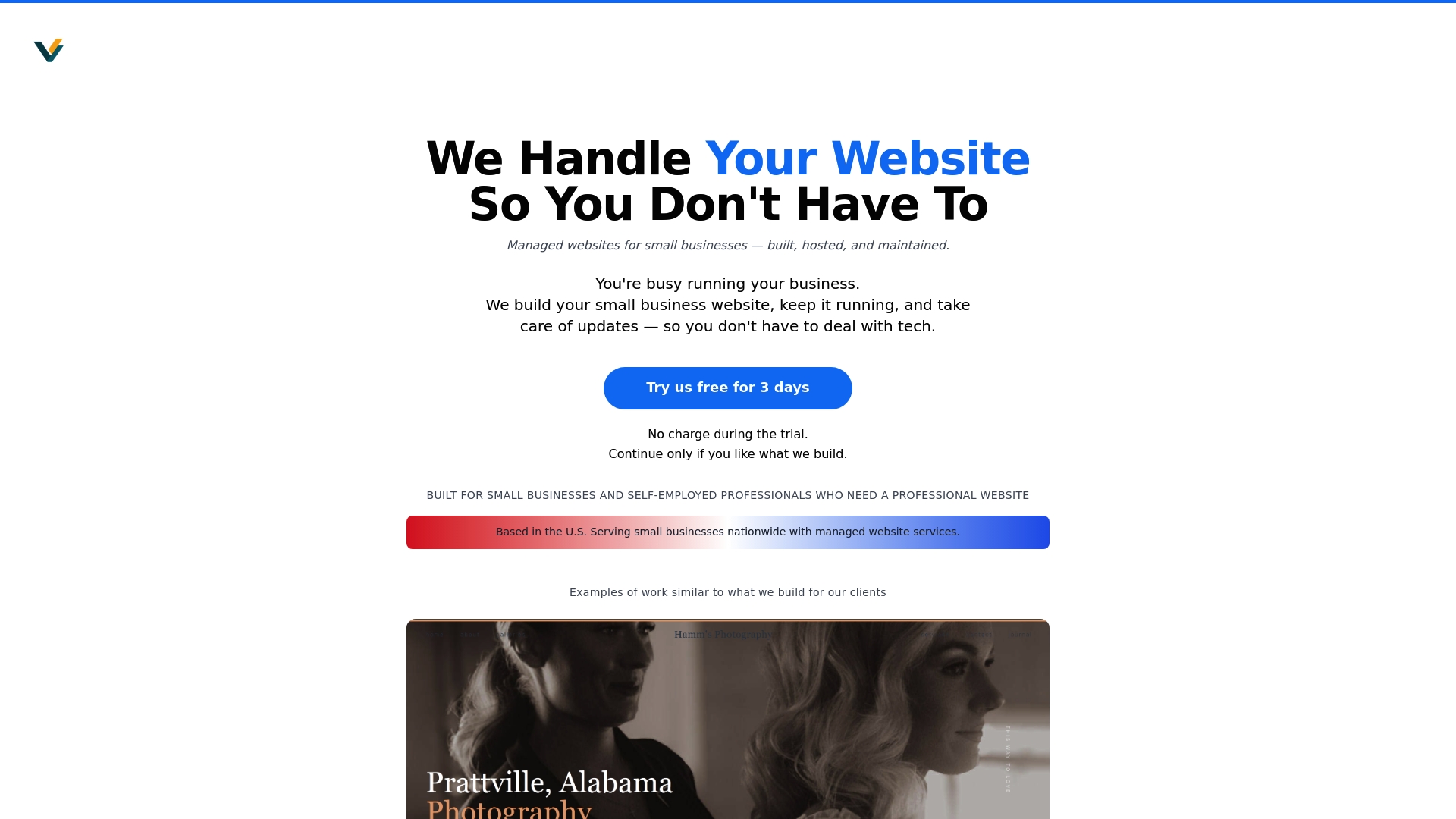
Ready to stop worrying about your website and start using it as your most effective marketing tool? Try Vegas Solutions free for 3 days with no risk. Experience the difference today.