
Role of Website Support – Why It Matters for Small Businesses

Managing a website can feel like a constant juggling act for small business owners and self-employed professionals. It is easy to get overwhelmed by technical issues and security threats while trying to keep your digital storefront current and reliable. Professional website support offers comprehensive digital maintenance strategies that handle everything from security management to content updates. This guide shows how the right support can help you protect your online presence and keep your focus where it belongs—on growing your business.
Defining Website Support for Small Businesses
Website support for small businesses encompasses a comprehensive set of digital maintenance and optimization services designed to keep online operations running smoothly. These services go far beyond basic technical troubleshooting, representing a critical infrastructure that enables businesses to maintain a professional, secure, and functional digital presence.
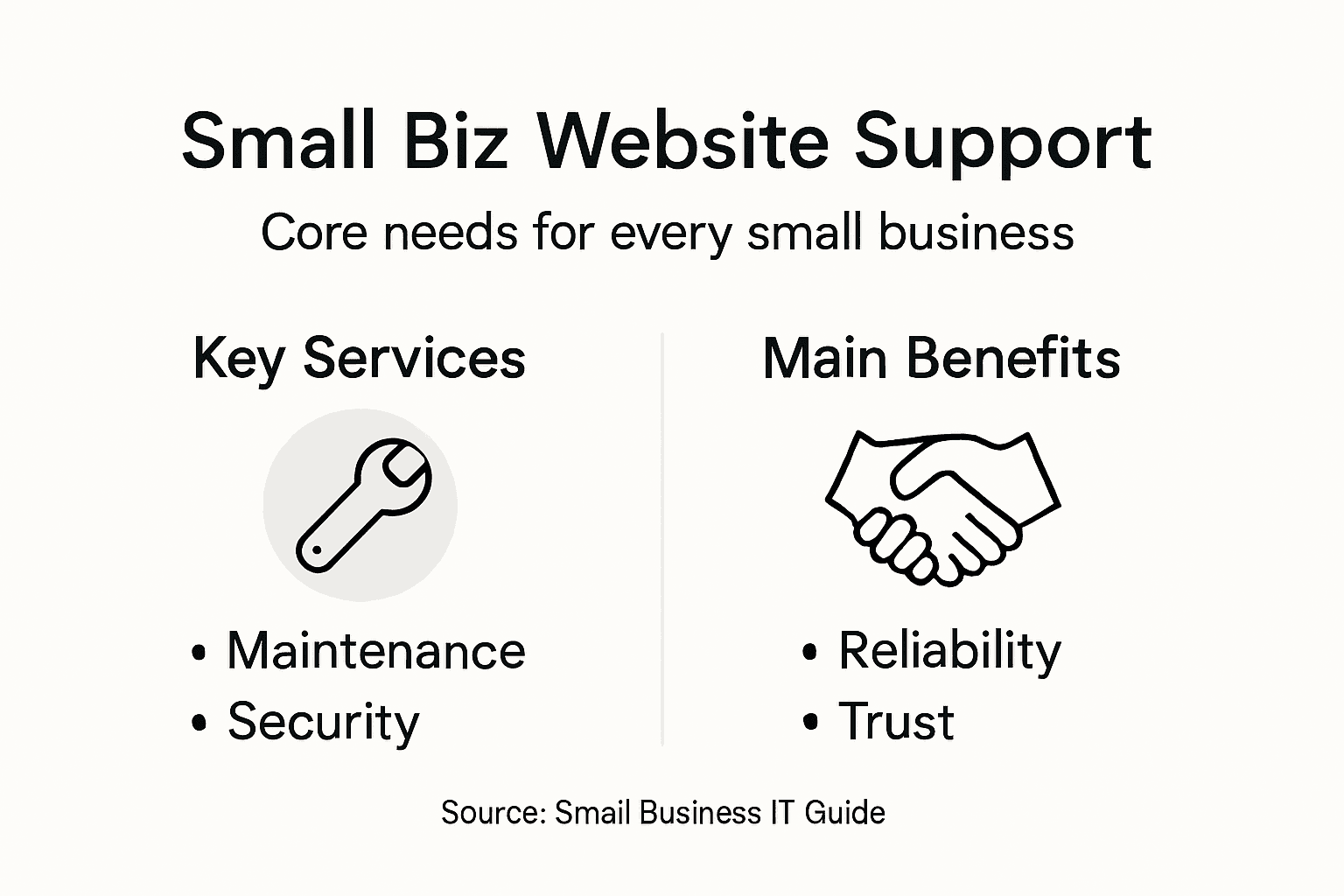
Small businesses typically require website support that covers multiple essential dimensions:
- Technical maintenance to resolve functionality issues
- Security management to protect against digital threats
- Performance monitoring to ensure consistent website reliability
- Content update assistance to keep digital platforms current
- Backup and recovery services to prevent potential data loss
The core objective of website support is to create a seamless digital experience that allows business owners to focus on their primary operations without getting bogged down by technical complexities. Comprehensive digital maintenance strategies help small enterprises maintain their online storefront with minimal direct intervention.
Effective website support recognizes that each small business has unique digital requirements. This means support services must be adaptable, providing scalable solutions that can grow alongside the business. Unlike large corporations with extensive IT departments, small businesses need nimble, cost-effective support mechanisms that deliver maximum value without overwhelming complexity.
Core Functions of Effective Website Support
Effective website support for small businesses involves a strategic approach to maintaining a robust and dynamic online presence. Comprehensive website management requires addressing multiple critical functions that ensure smooth digital operations and optimal user experience.
The core functions of website support can be categorized into several essential dimensions:
- Navigation design to facilitate user interaction
- Performance optimization for fast loading speeds
- Security protocol implementation
- Cross-platform compatibility
- Content management and updates
- Search engine optimization
- Mobile responsiveness
Small businesses must prioritize these functions to create a professional digital platform that effectively represents their brand. Technical maintenance goes beyond simple troubleshooting, encompassing proactive monitoring, regular updates, and strategic improvements that keep websites functioning at peak efficiency.
Additionally, effective website support requires ongoing attention to user accessibility and technical performance. This means continuously evaluating website functionality, ensuring seamless user experiences across different devices, and maintaining robust security measures that protect both business and customer data. By implementing comprehensive support strategies, small businesses can transform their websites from basic online placeholders to dynamic, engaging digital storefronts that drive business growth.

Types of Website Support Services Available
Small businesses have access to a diverse range of website support solutions designed to address their unique digital infrastructure needs. These services are not one-size-fits-all but instead offer flexible approaches tailored to different business scales, technical complexity, and operational requirements.
The primary types of website support services include:
- Technical maintenance for system updates and bug fixes
- Security monitoring to prevent digital threats
- Performance optimization for faster website loading
- Content management and regular updates
- Backup and disaster recovery planning
- User experience enhancement
- Search engine optimization support
- Responsive design and cross-platform compatibility
Each service type serves a critical function in maintaining a robust online presence. Technical maintenance ensures websites remain current with the latest software updates and functionality improvements. Security monitoring provides proactive defense against potential cyber threats, while performance optimization helps businesses maintain fast, responsive digital platforms that keep visitors engaged.
Here's a summary of common website support services and their direct benefits for small businesses:
| Support Service | Key Benefit | Typical Outcome |
|---|---|---|
| Technical Maintenance | Ensures smooth site operation | Minimal website downtime |
| Security Monitoring | Defends against cyberattacks | Reduced risk of data breaches |
| Content Management | Keeps site information current | Improved customer trust |
| Performance Optimization | Enhances loading speed | Higher visitor engagement |
| Backup and Disaster Recovery | Safeguards business data | Faster recovery after incidents |
| Search Engine Optimization | Boosts site visibility | More web traffic and leads |
Small businesses can choose between different support models, ranging from basic troubleshooting packages to comprehensive strategic partnerships. These services can be scalable, allowing companies to adjust their support level as their digital needs evolve. By investing in professional website support, small businesses can focus on their core operations while ensuring their online presence remains professional, secure, and technologically current.
Ongoing Maintenance and Security Essentials
Website maintenance and security are not one-time events but continuous processes that demand consistent attention and strategic planning. Small businesses must develop a proactive approach to protecting their digital assets and ensuring uninterrupted online functionality.
Key ongoing maintenance and security essentials include:
- Regular software updates to patch vulnerabilities
- Automated backup systems to prevent data loss
- Continuous security monitoring
- Performance optimization checks
- User access management
- SSL certificate maintenance
- Malware scanning and removal
- Firewall configuration updates
Implementing a comprehensive maintenance strategy requires understanding the interconnected nature of digital security. Businesses must treat their websites like living systems that require constant nurturing and protection. This means not just responding to issues as they arise, but anticipating potential vulnerabilities and systematically addressing them before they become critical problems.
Small businesses should consider establishing a structured maintenance schedule that includes routine checkups, security assessments, and performance evaluations. This approach transforms website management from a reactive task into a strategic business function that protects digital investments and maintains professional online credibility.
Risks of Poor or Neglected Support
Neglecting website support can expose small businesses to devastating consequences that extend far beyond simple technical inconveniences. Website management risks represent significant threats to operational stability, financial performance, and brand reputation.
The most critical risks include:
- Security vulnerabilities leading to potential data breaches
- Performance degradation causing visitor frustration
- Search engine ranking decline
- Customer trust erosion
- Revenue interruption
- Compliance violations
- Higher long-term repair costs
- Competitive disadvantage
Security breaches represent perhaps the most immediate and dangerous risk for small businesses. Without consistent monitoring and proactive maintenance, websites become vulnerable to malware, hacking attempts, and potential data theft. These incidents can result in immediate financial losses, legal complications, and long-lasting damage to customer confidence.
Beyond security concerns, neglected websites suffer from progressive performance deterioration that directly impacts business credibility. Slow loading times, broken links, and outdated content signal unprofessionalism to potential customers, potentially driving them toward competitors with more maintained digital platforms. The cumulative effect of these seemingly minor issues can create significant barriers to business growth and customer acquisition.
Comparing DIY and Professional Support Approaches
Small businesses face a critical decision when managing their website support: whether to handle technical maintenance internally or invest in professional services. Each approach comes with distinct advantages and potential drawbacks that can significantly impact digital performance and operational efficiency.
Key differences between DIY and professional website support include:
- Time investment required for maintenance
- Technical expertise needed for complex tasks
- Cost considerations across short and long-term periods
- Security management capabilities
- Performance optimization strategies
- Scalability of support solutions
- Access to specialized tools and resources
- Continuous monitoring capabilities
DIY approaches might seem cost-effective initially, but they often demand substantial time and technical knowledge that most small business owners cannot consistently provide. Professional support services offer comprehensive solutions that go beyond basic maintenance, providing strategic insights, proactive problem-solving, and specialized expertise that individual entrepreneurs rarely possess.
The true value of professional website support lies in its ability to transform technical maintenance from a burden into a strategic asset. By outsourcing complex digital infrastructure management, small businesses can redirect their energy toward core operational goals, knowing their online presence remains secure, updated, and optimized for maximum performance.
Below is a side-by-side comparison of DIY versus professional website support for small businesses:
| Factor | DIY Support Approach | Professional Support Approach |
|---|---|---|
| Time Commitment | High, frequent manual tasks | Low, handled by experts |
| Upfront Cost | Lower, but hidden time costs | Higher, but fixed monthly fees |
| Expertise Needed | Strong technical knowledge required | Expert skills provided |
| Security Management | Basic, risk of missed threats | Advanced, proactive protection |
| Growth Scalability | Difficult to adapt as business grows | Flexible, scales with business |
Simplify Your Small Business Website Support Today
Website support is critical to keeping your small business website secure, fast, and professional as explained in the article. If you are facing challenges managing technical maintenance, security monitoring, or content updates while running your business, you are not alone. Many small business owners struggle with time-consuming website upkeep that distracts from core operations. At Vegas Solutions, we understand that you want expert, hands-off support that lets you focus on growth without the stress of technical headaches.
Key benefits you gain with Vegas Solutions include:
- One point of contact making communication simple
- Fast turnaround with responsive ongoing support
- Built-in security management and performance optimization
- Fully handled website hosting, maintenance, and updates
Start with a $69 demo to experience worry-free website support that scales with your business needs. Explore how we manage your website so you never have to worry about neglected maintenance again.

Start now to protect your digital presence and improve your website's performance with expert professional support. Visit Vegas Solutions and take the first step toward hands-free website management that empowers your small business.