

Over 60 percent of American entrepreneurs say sharing their story online helps attract new clients and builds trust more quickly. As an American small business owner or self-employed professional, having a website that tells your unique journey is no longer optional. Discover how informational websites make it easy to educate, inspire, and connect with visitors without technical hurdles, turning your personal and professional experiences into powerful digital assets.
Table of Contents
- 1. Informational Websites For Sharing Your Story
- 2. E-Commerce Websites For Selling Products Online
- 3. Portfolio Websites To Showcase Your Work
- 4. Service-Based Websites For Booking And Contact
- 5. Blog Websites For Content And Seo Growth
- 6. Membership Websites For Exclusive Access
- 7. Landing Pages For Targeted Marketing
Quick Summary
| Key Message | Explanation |
|---|---|
| 1. Utilize Informational Websites | These platforms share your story and showcase expertise through valuable resources. |
| 2. Optimize E-Commerce Experiences | Create intuitive navigation and trust signals to improve online sales. |
| 3. Design Engaging Portfolio Websites | Highlight your work with quality visuals and clear content organization. |
| 4. Integrate Streamlined Booking Systems | Automated systems simplify client scheduling and improve service efficiency. |
| 5. Focus on Blog SEO for Visibility | Consistent, optimized content helps establish authority and enhances organic traffic. |
1. Informational Websites for Sharing Your Story
Informational websites represent powerful digital platforms where entrepreneurs and professionals can transform their unique stories into compelling online narratives. These websites go beyond traditional marketing by delivering educational content that connects with audiences through meaningful communication.
At their core, informational websites are designed to educate, inspire, and provide valuable resources to visitors. Unlike commercial websites focused solely on selling products, these platforms prioritize knowledge sharing and storytelling. They help you build credibility by showcasing your expertise, personal journey, and professional insights.
Creating an effective informational website requires strategic content planning. Your site should feature well structured sections that guide visitors through your narrative. This might include an engaging "About" page that shares your professional background, blog posts highlighting industry experiences, and resource sections offering downloadable guides or tutorials related to your field.
Visual storytelling plays a crucial role in making your informational website memorable. Use professional photographs, infographics, and clean design elements that reflect your personal brand. Break complex information into digestible sections with headers, bullet points, and engaging paragraph structures that make learning enjoyable and accessible.
Pro tip: Design your informational website with a clear navigation structure that allows visitors to easily understand and explore your professional story within three clicks of arriving on your homepage.
2. E-Commerce Websites for Selling Products Online
E-commerce websites are powerful digital storefronts that enable businesses to reach customers worldwide and sell products without traditional physical retail limitations. Academic research highlights how strategic website design and user experience can dramatically impact online sales performance.
Successful e-commerce platforms combine multiple critical elements to create seamless buying experiences. These include intuitive navigation, high-quality product images, detailed descriptions, transparent pricing, and secure payment systems. Your online store should feel welcoming and professional while making purchasing as simple and straightforward as possible.
Building trust is paramount in online selling. Customers need reassurance about product quality, shipping reliability, and transaction security. Implement clear return policies, display customer reviews prominently, and use professional website design that signals credibility. Include multiple payment options and showcase security badges to help visitors feel confident making purchases.
Design your e-commerce website with mobile responsiveness in mind. More than half of online shopping now happens on smartphones and tablets. Ensure your product pages load quickly, images resize correctly, and checkout processes work smoothly across all device types. A mobile-friendly design can significantly increase your potential customer base.
Pro tip: Invest in high-quality product photography and write detailed, benefit-focused descriptions that help customers understand exactly what they are purchasing.
3. Portfolio Websites to Showcase Your Work
Portfolio websites are powerful digital platforms that transform your professional achievements into compelling visual narratives. Academic research underscores how these online spaces can dramatically enhance your professional visibility and credibility.
A well designed portfolio website goes beyond simple image galleries. It tells your professional story through strategic content organization, highlighting your unique skills, experiences, and accomplishments. Think of your portfolio as a dynamic representation of your professional journey that potential clients or employers can explore at their convenience.
When creating your portfolio website, focus on three key elements: visual appeal, clear navigation, and comprehensive yet concise content. Include high quality images or examples of your work, brief descriptions explaining the context and your contribution, and a clean layout that makes exploring your achievements effortless. Consider creating sections that demonstrate different aspects of your professional capabilities such as projects, skills, testimonials, and professional background.
Personalization is crucial in portfolio websites. Your design should reflect your professional personality while maintaining a polished and professional aesthetic. Use a consistent color scheme, professional typography, and thoughtful formatting that makes your work shine. Ensure that visitors can quickly understand your professional expertise and unique value proposition within seconds of landing on your site.
Pro tip: Update your portfolio website regularly with recent projects and remove older work that no longer represents your current professional capabilities.
4. Service-Based Websites for Booking and Contact
Service-based websites with integrated booking systems transform how businesses manage client interactions and scheduling. Booking systems streamline scheduling by providing automated tools that reduce administrative workload and improve customer experience.
Modern booking platforms offer far more than simple appointment scheduling. These sophisticated systems include features like real-time availability tracking, automated email reminders, secure payment processing, and seamless calendar synchronization. By implementing a robust booking system, you can eliminate back-and-forth communication and provide clients with instant scheduling capabilities.
Designing an effective service-based booking website requires careful consideration of user experience. Your platform should offer intuitive navigation, clear pricing information, and multiple contact options. Include detailed service descriptions, professional photos, and transparent availability to help potential clients make informed decisions quickly.
Customization is key when selecting a booking system. Choose a platform that allows you to match your brand aesthetic, set specific scheduling rules, and integrate with your existing business tools. Consider features like buffer times between appointments, client information collection, and automated confirmation messages to enhance overall efficiency.
Pro tip: Test your booking system thoroughly from a client perspective and ensure the entire scheduling process can be completed in three clicks or less.
5. Blog Websites for Content and SEO Growth
Blog websites represent powerful digital platforms where businesses can establish thought leadership, connect with audiences, and improve online visibility. Blog SEO requires strategic optimization to transform content into a sustainable marketing engine.
Successful blog websites go beyond simple writing. They strategically craft content that solves reader problems, targets specific keywords, and provides genuine value. The most effective blogs understand their audience deeply, addressing specific pain points with comprehensive, well-researched articles that demonstrate expertise and build trust.
Creating an impactful blog involves more than writing occasional posts. Develop a consistent content strategy that includes thorough keyword research, engaging headlines, and in depth articles that comprehensively explore topics. Focus on producing original insights that differentiate your content from generic online information. Incorporate multimedia elements like images, infographics, and videos to enhance reader engagement and time spent on your site.
Search engines reward blogs that demonstrate expertise, authority, and consistent quality. This means publishing well structured content with clear headings, practical examples, and actionable advice. Pay attention to technical SEO elements like meta descriptions, alt text for images, and internal linking to improve your website's search performance and user experience.
Pro tip: Develop an editorial calendar that plans content at least three months in advance and ensures a steady stream of high quality, targeted articles.
6. Membership Websites for Exclusive Access
Membership websites transform online communities by offering specialized digital spaces where professionals and enthusiasts connect through exclusive content and shared interests. Academic societies are reinventing membership experiences through innovative digital platforms that provide personalized engagement.
Successful membership websites deliver significant value beyond basic access. They create dynamic ecosystems that offer members unique resources, networking opportunities, professional development tools, and curated content tailored to specific interests. The most effective platforms leverage technology to understand individual member preferences and provide customized experiences that feel personally relevant.
Designing a compelling membership website requires strategic thinking about user experience and value proposition. Create tiered membership levels that offer progressively more sophisticated benefits. Include features like discussion forums, expert webinars, downloadable resources, networking events, and members-only content. Implement intuitive navigation that makes accessing premium materials seamless and rewarding.
Technology plays a critical role in modern membership platforms. Integrate artificial intelligence and machine learning to recommend personalized content, track member engagement, and continuously enhance the user experience. Use analytics to understand member behavior and preferences, allowing you to refine your offerings and create increasingly targeted value.
Pro tip: Design your membership website with clear value metrics and regularly survey members to understand their evolving needs and expectations.
7. Landing Pages for Targeted Marketing
Landing pages represent precision marketing tools designed to convert specific audience segments into engaged customers or leads. Personalized landing pages dynamically enhance conversion rates by addressing unique visitor concerns with targeted messaging.
Effective landing pages are laser focused digital experiences that eliminate distractions and guide visitors toward a single compelling action. Unlike standard website pages, landing pages strip away complex navigation and concentrate on delivering a clear value proposition that speaks directly to a specific audience segment. Your goal is to create an immediate connection that motivates visitors to take the next step.
Designing high performing landing pages requires strategic thinking about user psychology and visual communication. Develop strong headlines that immediately capture attention, use concise and benefit driven copy, and include social proof like testimonials or trust signals. Implement clean visual designs with intuitive layouts that guide the eye toward your primary call to action. Ensure that your form fields are minimal and your value proposition is crystal clear within the first few seconds of a visitor landing on the page.
Technology now allows for sophisticated landing page personalization. Implement dynamic content that changes based on visitor demographics, source of traffic, or previous interactions. Use analytics to track user behavior and continuously optimize your page elements. A/B testing different headlines, images, and call to action buttons can reveal insights that incrementally improve conversion performance.
Pro tip: Create multiple targeted landing pages for different audience segments and traffic sources to maximize relevance and conversion potential.
Below is a comprehensive table summarizing the key types of websites and their respective characteristics, objectives, and design considerations as discussed in the article.
| Website Type | Purpose and Objectives | Key Design Considerations |
|---|---|---|
| Informational Websites | Educational and inspiring connection through storytelling. | Structuring narrative sections with visually compelling elements. |
| E-Commerce Websites | Selling products online by providing seamless buying experiences. | High-quality imagery, intuitive navigation, and mobile responsiveness. |
| Portfolio Websites | Showcasing professional achievements visually. | Incorporating high-quality work samples with personalized yet professional aesthetics. |
| Service-Based Booking Websites | Managing client interactions and schedules effectively. | Implementing intuitive navigation, integrated real-time tracking, and detailed service descriptions. |
| Blog Websites | Thought leadership and SEO growth through engaging content. | Conducting keyword research and optimizing content with actionable advice and multimedia elements. |
| Membership Websites | Building exclusive communities with tailored content and resources. | Creating tiered memberships and utilizing personalized engagement through technology. |
| Landing Pages | Converting specific audience segments with targeted messaging. | Designing focused and visually compelling pages with actionable call-to-actions and analytics integration. |
Discover the Right Website Solution Without the Tech Headaches
The article highlights how different types of business websites address unique challenges—from building credibility with an informational website to driving sales with an e-commerce platform or simplifying bookings on a service-based site. The key pain points include managing complex technology, creating clear navigation, and maintaining ongoing site updates to keep your digital presence effective and professional. If you want to stop worrying about technical setups but still deliver a powerful online experience that fits your specific business needs, you are not alone.
Vegas Solutions specializes in helping small businesses and self-employed professionals like you avoid tech overwhelm. We build, host, and maintain your website with simple language and one point of contact. Whether you need a portfolio site, a blog for SEO growth, or a membership platform, we handle the technical details so you can focus on what you do best. You can easily start with a $69 demo with no risk and only continue if it feels right.
Explore how we customize your digital presence to match your goals and solve your website challenges.
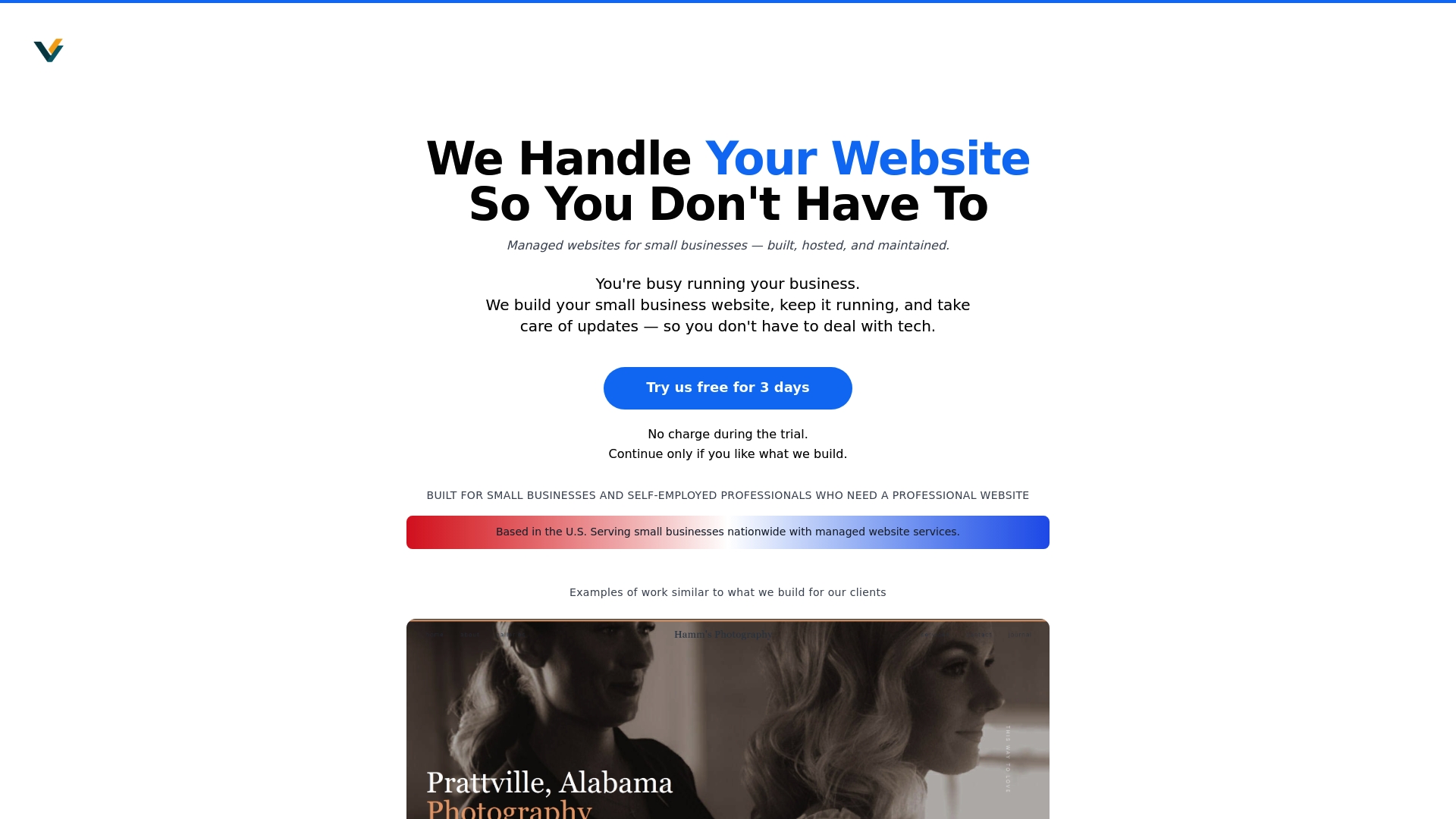
Ready to get started with a website that works for your unique business? Visit Vegas Solutions now and experience fast turnaround, ongoing support, and zero tech headaches. Your perfect website solution is just a click away.