Website Security – Why It Matters for Small Businesses

Suddenly losing access to your website or watching confidential information slip into the wrong hands is every small business owner's nightmare. For those who run their operations online in the United States, website security means more than just safeguarding a homepage—it is about protecting vital customer data and upholding your hard-earned reputation. This overview breaks down the critical steps, challenges, and must-have features for keeping your website safe, all without needing a background in programming or IT.
Defining Website Security for Business Owners
Website security represents a comprehensive approach to protecting digital assets from potential cyber threats. For small business owners, understanding website security means recognizing the critical steps needed to safeguard online information, customer data, and business reputation. Website security involves multiple layers of protection designed to prevent unauthorized access, data breaches, and potential operational disruptions.
At its core, website security encompasses several key defensive strategies:
- Implementing secure connection protocols
- Managing user access controls
- Protecting against malware and hacking attempts
- Ensuring data confidentiality and integrity
- Maintaining regular security updates and patches
Small businesses are particularly vulnerable to cybersecurity risks. Ongoing risk assessment helps identify potential vulnerabilities before they can be exploited. Cybercriminals often target smaller organizations, assuming they have less sophisticated security infrastructure. This makes proactive security measures not just recommended, but essential for business survival.
The potential consequences of inadequate website security extend far beyond technical disruptions. A single security breach can result in significant financial losses, damage to brand reputation, and potential legal liabilities. Data protection isn't just about technology - it's about maintaining customer trust and ensuring business continuity. Website security protects against unauthorized data access and helps prevent potential operational paralysis that could result from a major cyber incident.
Types of Website Threats and Attack Methods
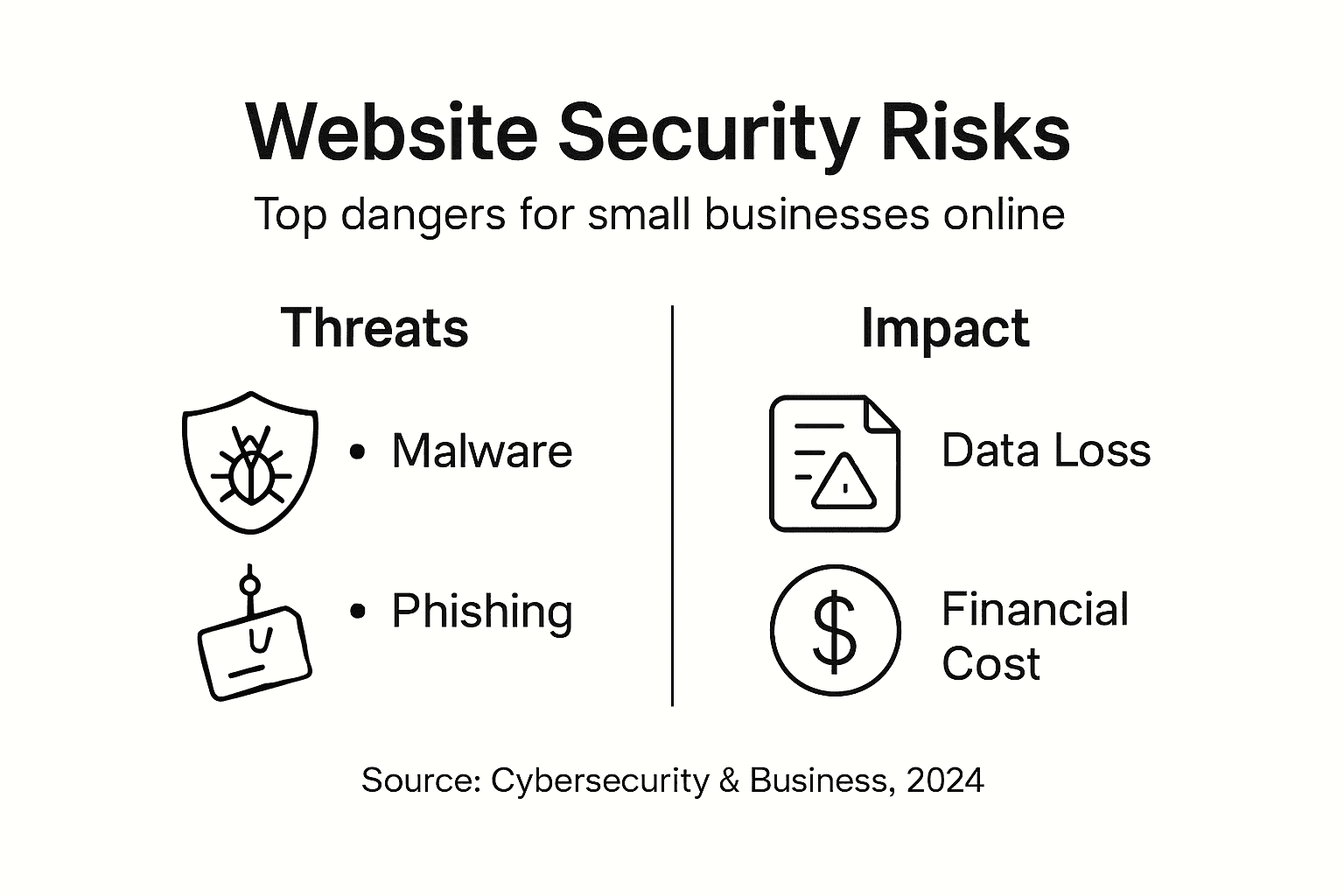
Cybercriminals employ numerous sophisticated techniques to compromise websites and exploit digital vulnerabilities. Website threats range from subtle infiltration methods to aggressive system disruptions, each designed to breach digital defenses and cause significant operational damage. Understanding these attack vectors is crucial for small business owners seeking to protect their online assets and customer data.
The most common types of website threats include:
- Malware infections: Viruses, ransomware, and spyware that infiltrate systems
- Phishing attacks: Deceptive attempts to steal sensitive login credentials
- Distributed Denial of Service (DDoS): Overwhelming website servers to cause system crashes
- SQL injection: Manipulating database queries to access restricted information
- Cross-site scripting: Inserting malicious scripts into legitimate websites
Web security threats continue evolving with increasing complexity and sophistication. Cybercriminals increasingly target small businesses, viewing them as easier targets with potentially weaker security infrastructure. These attacks can result in data theft, financial losses, and severe reputation damage.
Compare common website threats by method and potential consequences:
| Threat Type | Attack Method | Potential Consequence |
|---|---|---|
| Malware infection | Infiltrates with viruses | Data loss and system damage |
| Phishing attack | Deceptive email or link | Stolen credentials, fraud |
| DDoS attack | Overloads web servers | Site outages and lost revenue |
| SQL injection | Alters database queries | Unauthorized data access |
| Cross-site scripting | Inserts malicious code | User data compromise |
Attack surfaces have expanded dramatically with the growth of cloud computing and interconnected digital ecosystems. Cyberattack methods targeting websites now encompass complex strategies that can simultaneously exploit multiple system vulnerabilities. Small businesses must adopt a proactive, multilayered approach to digital defense, implementing robust security protocols that can detect and neutralize potential threats before they cause significant harm.
Key Website Security Features Explained
Website security is a comprehensive approach that goes beyond simple password protection. Small business owners need a robust defense strategy that encompasses multiple layers of protection to safeguard their digital assets effectively. Modern security features are designed to create an integrated shield against increasingly sophisticated cyber threats.
Critical website security features include:
- Multi-factor authentication: Requiring multiple verification steps
- Web application firewalls: Monitoring and blocking suspicious traffic
- SSL/HTTPS encryption: Securing data transmission channels
- Regular vulnerability scanning: Identifying potential system weaknesses
- Automated patch management: Keeping software updated and protected
Security features require continuous monitoring to remain effective against evolving cyber risks. Each layer of protection serves a unique purpose in creating a comprehensive defense mechanism. Small businesses must implement these features strategically, understanding that security is an ongoing process rather than a one-time setup.
Here's how website security features impact small business operations:
| Security Feature | Primary Function | Business Impact |
|---|---|---|
| Multi-factor authentication | Verifies users with multiple checks | Reduces risk of unauthorized access |
| Web application firewall | Filters and monitors incoming traffic | Blocks malicious requests and prevents hacks |
| SSL/HTTPS encryption | Secures information in transit | Protects sensitive customer data and builds trust |
| Vulnerability scanning | Identifies system flaws | Prevents exploitation and ensures ongoing protection |
| Automated patch management | Keeps software up-to-date | Minimizes exposure to new threats and downtime |
Authentication services play a crucial role in protecting digital environments. Secure login experiences involve more than just complex passwords - they require intelligent systems that can detect and prevent unauthorized access attempts. This means implementing advanced techniques like behavioral analysis, IP tracking, and real-time threat detection to create multiple barriers against potential breaches.
Legal Obligations and Data Protection Laws
Data protection laws represent a complex web of legal requirements that small businesses must navigate carefully. These regulations are designed to safeguard sensitive information and ensure responsible handling of customer data across digital platforms. Understanding these legal obligations is not just about avoiding penalties, but about building trust and demonstrating professional accountability.
Key legal compliance requirements include:
- Protecting personal identifiable information
- Implementing secure data storage practices
- Obtaining explicit user consent for data collection
- Creating transparent privacy policies
- Establishing data breach notification procedures
Cybersecurity best practices help businesses avoid significant legal risks and potential financial penalties. Different industries may have specific regulatory requirements, such as HIPAA for healthcare or GDPR for businesses handling European customer data. These regulations mandate comprehensive security measures that go beyond basic protection strategies.
Federal regulations require businesses to maintain rigorous standards for information protection. Secure connection protocols are critical in meeting legal expectations, ensuring that data transmission remains confidential and protected from unauthorized access. Small business owners must develop comprehensive strategies that not only meet current legal standards but also anticipate potential future regulatory changes.
Financial Risks of Poor Website Security
Cybersecurity vulnerabilities represent a significant financial threat to small businesses, extending far beyond simple technical concerns. A single security breach can trigger a cascade of expensive consequences that can potentially devastate a company's financial stability and long-term viability. The monetary impact of inadequate website protection goes well beyond immediate repair costs.
Potential financial risks include:
- Direct data breach recovery expenses
- Regulatory fines and legal penalties
- Lost customer trust and reputation damage
- Operational downtime and revenue interruption
- Potential lawsuits from affected customers
Cyberattacks expose businesses to substantial financial risks that can quickly escalate beyond initial expectations. Small businesses are particularly vulnerable, often lacking the robust security infrastructure of larger corporations. The average cost of a data breach can range from tens of thousands to millions of dollars, depending on the severity and scope of the incident.

Unauthorized resource usage represents another critical financial risk that many business owners overlook. Security breaches cause significant monetary impacts through multiple channels, including direct theft, infrastructure compromise, and extended service interruptions. These incidents can drain resources, divert critical business attention, and create long-lasting economic repercussions that extend far beyond the immediate technical damage.
Common Mistakes Small Businesses Make
Cybersecurity misconceptions often leave small businesses exposed to significant digital risks. Many entrepreneurs mistakenly believe that their business is too small to attract cybercriminals' attention, a dangerous assumption that can lead to devastating security vulnerabilities. Understanding these common mistakes is the first step toward creating a robust defense strategy.
Frequent cybersecurity missteps include:
- Assuming they are not a target
- Neglecting regular system updates
- Using weak or repetitive passwords
- Lacking multi-factor authentication
- Ignoring employee cybersecurity training
Small businesses frequently overlook critical security practices that could protect them from potential breaches. The absence of a dedicated security program manager means many organizations lack a coordinated approach to digital defense. Cybercriminals specifically target smaller businesses, knowing they often have less sophisticated protection mechanisms and more vulnerable entry points.
Third-party asset management represents another critical area of vulnerability. Embedding uncontrolled digital resources can create significant security risks, allowing potential attackers to exploit seemingly innocent website components. Small business owners must carefully vet and continuously monitor all external tools, plugins, and integrated services to prevent potential security breaches.
Secure Your Small Business Website with Confidence
Small businesses often face tough challenges when it comes to website security. As the article highlights, threats like unauthorized access, data breaches, and evolving cyberattacks can put your business reputation and finances at serious risk. You need a security solution that goes beyond passwords and patches to provide multi-layered protection without adding tech headaches.
Vegas Solutions understands these pain points. We specialize in building, hosting, and maintaining websites for small businesses and self-employed professionals. Our service includes secure setup protocols, ongoing vulnerability monitoring, and instant updates so you never have to worry about outdated software or weak defenses. When you partner with us you get one point of contact, clear communication, and a fast turnaround designed to keep your business safe and compliant with data protection laws.
Ready to protect your business and focus on growth rather than cybersecurity worries?
Experience hassle-free website security with Vegas Solutions.
Take control of your website security today by starting with a $69 demo. Visit Vegas Solutions and see how simple protecting your digital assets can be when trusted experts handle everything for you.