

Over half of American small businesses struggle to get noticed online without spending more on advertising. For service-based owners, blogging offers a simple way to connect with local clients while sidestepping those website headaches. When you share practical advice and helpful answers, your business can stand out as a trusted local expert. This introduction will reveal how American service professionals can use blogging to build credibility, increase search visibility, and win new customers in their communities.
Table of Contents
- Defining Blogging For Small Businesses
- Key Ways Blogging Drives Visibility And Seo
- How Blogs Attract And Engage Local Clients
- Building Authority And Trust Through Content
- Avoiding Common Blogging Mistakes And Pitfalls
Key Takeaways
| Point | Details |
|---|---|
| Blogging Enhances Engagement | Blogging allows businesses to connect with customers by answering their questions and sharing local insights. This builds trust and transforms casual visitors into loyal supporters. |
| Improves Online Visibility | Regularly publishing keyword-optimized blog content boosts search engine rankings and attracts organic traffic. This levels the playing field against larger competitors. |
| Establishes Authority | Consistent, transparent blogging demonstrates industry expertise and builds credibility, positioning businesses as trusted resources in their communities. |
| Avoid Common Pitfalls | Small businesses should avoid inconsistent posting and self-promotional content, focusing instead on engaging, actionable insights that resonate with their audience. |
Defining Blogging for Small Businesses
Blogging is a strategic digital communication tool that allows small business owners to share valuable insights, showcase expertise, and connect directly with potential customers. Unlike traditional marketing approaches, blogging enables service professionals to demonstrate knowledge while building trust through authentic, informative content.
At its core, business blogging involves creating regular written content that addresses customer questions, explores industry trends, and highlights a company's unique perspective. For service-based businesses like home repair services, landscapers, or local consultants, blogs serve as an online platform to explain complex processes, share success stories, and establish credibility. Small business training platforms consistently recommend blogging as an affordable marketing strategy that levels the playing field for entrepreneurs competing against larger organizations.
Effective small business blogs typically focus on solving customer problems, answering common questions, and providing actionable advice relevant to their specific industry. These digital resources transform websites from static brochures into dynamic communication channels that engage potential clients, improve search engine visibility, and demonstrate professional expertise. By consistently publishing helpful content, business owners can position themselves as knowledgeable experts in their local market.
Here's how blogging benefits small businesses in different areas:
| Benefit Area | How Blogging Helps | Impact on Business |
|---|---|---|
| Customer Engagement | Answers questions and shares local stories | Builds community trust |
| Online Visibility | Publishes fresh, keyword-optimized content | Improves search rankings |
| Authority & Expertise | Demonstrates industry knowledge | Attracts loyal clients |
| Cost Effectiveness | Offers free, low-cost marketing | Levels competition with larger firms |
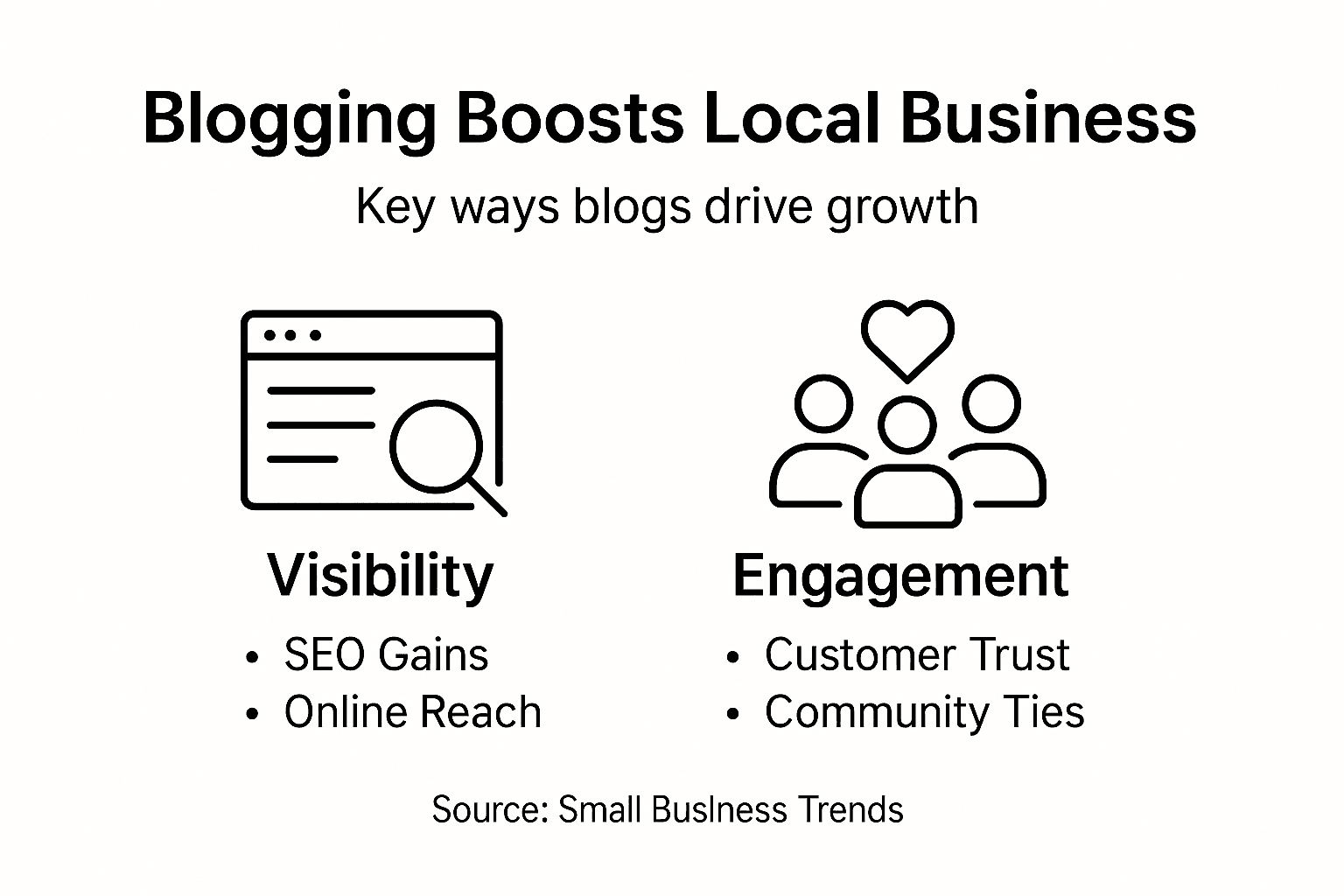
Pro tip: Start by creating a simple content calendar that outlines three to four blog topics addressing your most frequently asked customer questions.
Key Ways Blogging Drives Visibility and SEO
Blogging serves as a powerful strategic tool for small businesses to enhance their online visibility and improve search engine rankings. By consistently publishing high-quality, relevant content, businesses can signal expertise to search engines and potential customers alike. SEO marketing strategies demonstrate that regular blog posts can significantly boost a website's organic search performance.
Keyword optimization plays a critical role in driving search visibility. Strategically incorporating industry-specific terms and phrases helps search engines understand a business's core offerings and match content with potential customer searches. This approach allows small businesses to compete effectively against larger competitors by targeting specific local and niche market segments, creating opportunities to appear in search results where larger companies might be too generalized.
Beyond keywords, blogging contributes to SEO through creating fresh, dynamic content that search engines prioritize. Each new blog post creates an additional indexed page for a website, increasing the likelihood of appearing in search results. Moreover, quality blog content encourages external websites to link back to a business's site, further improving domain authority and search rankings. These backlinks act as digital endorsements, signaling to search engines that the content is valuable and trustworthy.
Pro tip: Focus on creating blog content that directly answers specific customer questions in your local market, using language and terms your ideal clients actually use when searching online.
How Blogs Attract and Engage Local Clients
Blogs represent a powerful mechanism for small businesses to establish genuine connections with local customers by creating content that directly addresses community needs and interests. Local marketing strategies demonstrate how targeted blog content can transform casual website visitors into loyal community supporters by providing valuable, location-specific information.

Location-targeted content allows businesses to showcase their understanding of local challenges and opportunities. By writing about neighborhood events, regional industry trends, and community-specific solutions, small businesses can position themselves as knowledgeable local experts. This approach goes beyond traditional advertising by offering genuine value – potential customers learn to see the business as a trusted resource rather than just another service provider.
Engagement extends beyond simply publishing content. Successful local blogs invite interaction through comments, encourage social media sharing, and address real questions potential customers are asking. By incorporating local keywords, referencing nearby landmarks, and discussing region-specific issues, businesses can improve their visibility in local search results while simultaneously building meaningful connections with their immediate community. This strategy helps transform a blog from a simple marketing tool into a dynamic platform for community dialogue and customer relationship building.
Pro tip: Create blog content that answers the specific questions your local customers ask most frequently, using language and examples that resonate with your immediate geographic community.
Building Authority and Trust Through Content
Blogs serve as powerful platforms for small businesses to demonstrate expertise, authenticity, and professional credibility. Trust-building strategies reveal that consistent, transparent content helps businesses establish meaningful connections with potential clients by showcasing deep industry knowledge and genuine commitment to solving customer challenges.
Authentic content goes beyond simple product descriptions or sales pitches. Successful business blogs share insights, explain complex processes, address common customer questions, and provide real-world solutions. By breaking down technical information into digestible, relatable content, small businesses can position themselves as approachable experts who understand their customers' specific needs and pain points. This approach transforms blogs from marketing tools into valuable resources that potential clients trust and appreciate.
Transparency and consistency are key elements in building online authority. Regularly publishing high-quality, informative content demonstrates a commitment to ongoing learning and customer support. Each blog post becomes an opportunity to showcase the business's unique perspective, industry understanding, and problem-solving capabilities. By sharing real experiences, case studies, and practical advice, businesses can differentiate themselves from competitors and create a distinct professional identity that resonates with their target audience.
Pro tip: Create a content calendar that ensures you consistently publish helpful, honest content addressing your customers' most pressing questions and challenges.
Avoiding Common Blogging Mistakes and Pitfalls
Small business owners often stumble when creating blog content by failing to understand the nuanced strategies that drive successful digital communication. Blogging best practices emphasize the importance of maintaining a consistent, strategic approach that goes far beyond random, infrequent posting.
One of the most critical errors small businesses make is inconsistent content creation. Many entrepreneurs start blogs with enthusiasm but quickly lose momentum, posting sporadically or abandoning their efforts entirely. This inconsistency signals unreliability to potential customers and search engines alike. Successful blogging requires developing a sustainable content strategy that aligns with available time and resources, focusing on quality over quantity while maintaining a predictable publishing schedule.
Another significant pitfall involves failing to genuinely engage with the target audience. Effective blogs are not one-way communication channels but interactive platforms that invite dialogue, address specific customer concerns, and provide real value. This means moving beyond self-promotional content and creating posts that directly answer customer questions, share industry insights, and demonstrate a deep understanding of local business challenges. Businesses must view their blog as a conversation starter, not just a marketing tool, by encouraging comments, responding to reader feedback, and creating content that truly resonates with their community.
This table compares typical blogging mistakes with best practices for small business owners:
| Common Mistake | Consequence | Best Practice Advice |
|---|---|---|
| Irregular posting | Loss of reader trust | Follow a consistent schedule |
| Pure self-promotion | Weak audience engagement | Share actionable expertise |
| Ignoring feedback | Missed connection opportunities | Respond and encourage dialogue |
Pro tip: Create a realistic content calendar with at least one blog post per month, and set aside dedicated time to write or develop content that genuinely helps your target customers.
Take Your Small Business Blog to the Next Level with Help From Vegas Solutions
The article shows how small businesses struggle with consistent blogging and turning their expertise into customer trust online. You want to build authority and engage local clients but technical challenges and time demands can hold you back from creating the dynamic website presence you need. Key goals like improving online visibility, ranking higher on search engines, and connecting with your community all require a reliable website partner who understands your unique needs and can handle the tough digital tasks.
At Vegas Solutions, we eliminate the tech headaches so you can focus on what matters: delivering value to your customers and growing your business. Whether you are just starting your content calendar or want to maintain steady blog posts that boost SEO and trust, we build, host, and maintain your website with simple language, fast turnaround, and ongoing support. Our easy process means you get a professional platform that truly represents your expertise without guesswork or overwhelm.
Don't wait while competitors climb the local search rankings. Get a website handled by experts who support your blogging and digital strategy every step of the way. Try us free for 3 days with no risk only continue if it feels like a good fit. Discover how Vegas Solutions can help your small business blog make a real impact today.