Why Update Your Website: Real Benefits for Small Businesses

Many small businesses see website updates as a chore that never ends, but staying current is more than a matter of appearances. Regular improvements signal to customers that your company is active, trustworthy, and focused on their needs. By embracing website maintenance as an ongoing tactic, you lay the groundwork for stronger customer relationships and higher search rankings that set your business apart from the competition.
What Website Updates Actually Mean
Website updates are far more strategic than simply changing a few images or rearranging content. For small businesses, updating a website represents a comprehensive approach to maintaining digital relevance, functionality, and customer engagement. Website maintenance involves deliberate, ongoing improvements that keep your online presence aligned with your current business goals, technological standards, and customer expectations.
Effective website updates typically encompass several critical areas:
- Content Refreshes: Updating text, images, and information to reflect current services, products, and company messaging
- Technical Optimization: Improving site speed, mobile responsiveness, and security protocols
- Design Enhancements: Modernizing visual elements and user interface to match current design trends
- Functionality Improvements: Adding or refining features that improve user experience and interaction
Regular updates are not just cosmetic—they directly impact how potential customers perceive and interact with your business. Professional website maintenance signals that your company is active, attentive, and committed to providing current, valuable information to your audience.
Small business owners often view website updates as optional or expensive. However, the reality is that consistent updates are a critical investment in digital marketing and customer trust. An outdated website can quickly erode credibility, making potential clients question whether your business is still operational or relevant.
Types of Updates: Content, Design, Security
Effective website updates are multifaceted, addressing three critical areas that directly impact a small business's online performance: content, design, and security. Each type of update serves a unique purpose in maintaining a professional, engaging, and trustworthy digital presence.
Content Updates involve more than simple text changes. They represent a strategic approach to communicating your business's current value proposition:
- Refreshing product or service descriptions
- Adding recent client testimonials
- Publishing industry insights and blog posts
- Updating pricing and offering details
- Highlighting recent business achievements or milestones
Design Updates focus on visual communication and user experience. Content design standards emphasize creating interfaces that are not just attractive, but functional and accessible. These updates might include:
- Modernizing color schemes and typography
- Improving mobile responsiveness
- Streamlining navigation menus
- Enhancing visual hierarchy
- Implementing intuitive user interface elements
Security Updates are perhaps the most critical, protecting your digital asset from potential cyber threats. These updates include:
- Installing the latest security patches
- Updating SSL certificates
- Implementing robust password protocols
- Securing data transmission channels
- Regular vulnerability assessments
Neglecting any of these update categories can significantly compromise your website's effectiveness and your business's online credibility.
Small businesses often underestimate the importance of consistent website maintenance. However, each update type plays a crucial role in maintaining a professional, secure, and engaging online presence that attracts and retains potential customers.
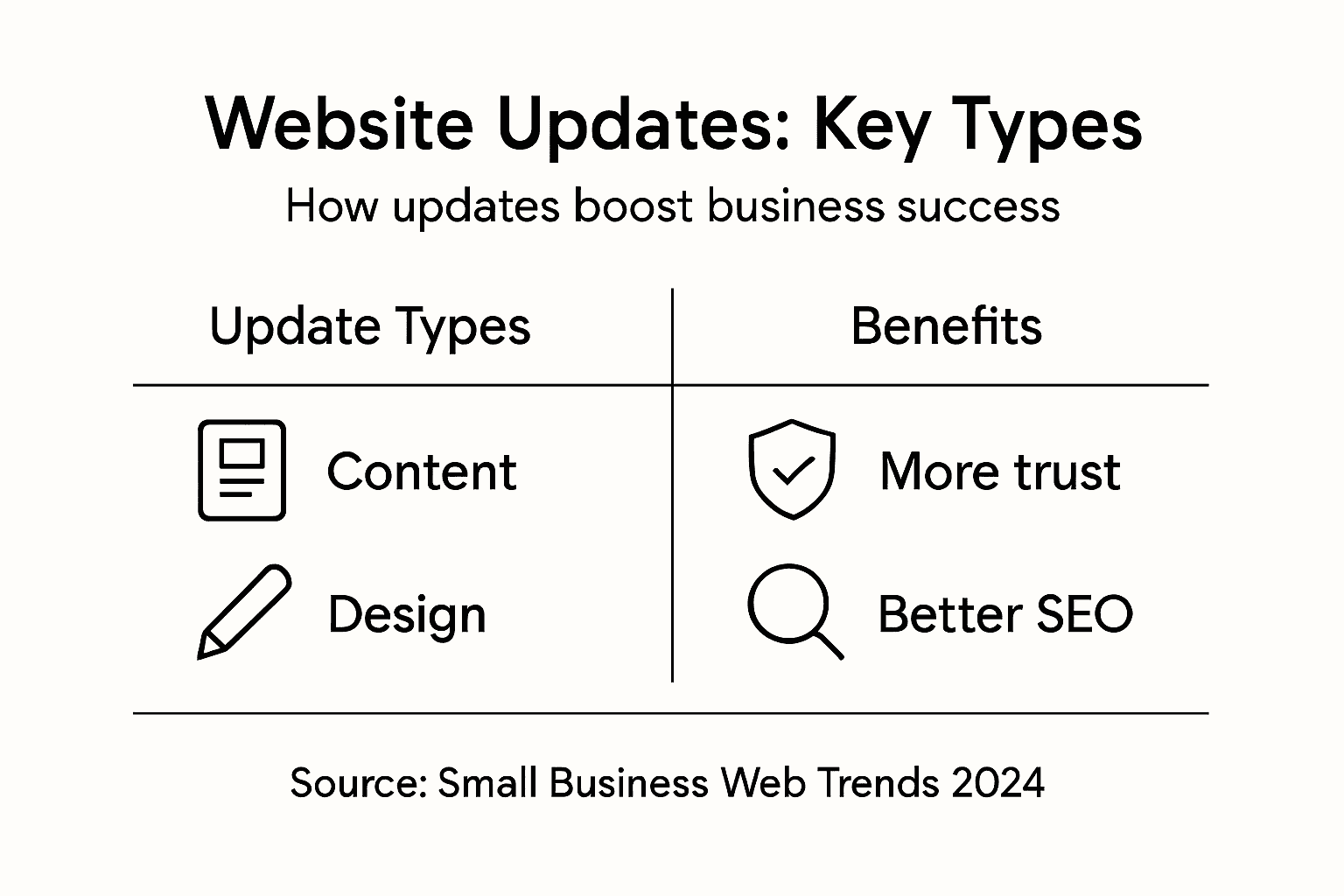
Here's a quick overview of how the three major website update areas impact business results:
| Update Type | Main Objective | Direct Business Benefit |
|---|---|---|
| Content | Keep messaging current | Improved credibility and engagement |
| Design | Enhance visual experience | Higher user satisfaction and trust |
| Security | Protect from cyber threats | Safeguarded reputation and data |
How Updates Impact SEO and User Trust
Website updates are not just cosmetic changes—they are critical signals that communicate your business's reliability, professionalism, and commitment to providing value. SEO trust metrics reveal that search engines and users alike prioritize websites that demonstrate consistent maintenance and credibility.
The impact on search engine optimization (SEO) is multifaceted and profound:
- Search Ranking Improvements: Regular updates indicate an active, relevant website
- User Engagement Signals: Frequent, quality content increases time spent on site
- Technical Performance: Updated sites typically load faster and work more smoothly
- Security Credibility: Modern security protocols boost user confidence
- Mobile Optimization: Updated sites perform better across different devices
Security Updates play a particularly crucial role in building digital trust. Website security protocols directly influence both search rankings and user perception. Potential customers instinctively avoid websites that appear outdated or potentially vulnerable.
Search engines reward websites that consistently demonstrate reliability, transparency, and proactive maintenance.
Small businesses often underestimate how deeply website updates affect user psychology. A well-maintained site signals professionalism, competence, and attention to detail. Conversely, an outdated website can instantly erode potential customer trust, causing visitors to question the business's current operational status and commitment to quality.

Modern consumers have become increasingly sophisticated in evaluating online credibility. They unconsciously assess websites through multiple lenses: visual design, content freshness, technical performance, and security indicators. Each update is an opportunity to communicate your business's values and reliability.
Risks of Outdated Websites for Small Businesses
An outdated website is more than just an aesthetic problem—it's a potential business killer. Small businesses that neglect their online presence risk losing credibility, customer trust, and competitive advantage.
The most significant risks of an outdated website include:
- Decreased Search Engine Visibility: Older sites get pushed down in search rankings
- Reduced Customer Confidence: Dated designs suggest an inactive or unreliable business
- Security Vulnerabilities: Unpatched websites become prime targets for cyberattacks
- Poor Mobile Performance: Outdated sites often fail on modern mobile devices
- Missed Conversion Opportunities: Inefficient design can drive potential customers away
Technological Obsolescence represents a serious threat to small business survival. Websites that haven't been updated in 2-3 years typically suffer from multiple critical issues:
- Incompatibility with modern browsers
- Slow loading times
- Non-responsive design
- Broken links and dysfunctional features
- Inadequate security protocols
An outdated website is equivalent to a storefront with dirty windows, peeling paint, and a broken door—it actively repels potential customers.
Small business owners often underestimate how quickly digital standards evolve. What looked professional three years ago now appears dated and unprofessional. Modern consumers make split-second judgments about a business's credibility based on their website's appearance and functionality.
The financial implications are substantial. A poorly maintained website can cost businesses thousands in lost revenue by driving away potential customers who lose trust within seconds of landing on an outdated page.
The table below summarizes common symptoms and financial risks of outdated websites for small businesses:
| Symptom | Risk Level | Potential Financial Impact |
|---|---|---|
| Slow load times | High | Lost sales from impatient visitors |
| Broken links/features | Medium | Diminished user confidence |
| Unsecured data | Very High | Fines and data breach costs |
| Poor mobile compatibility | High | Missed opportunities on smartphones |
Best Practices for Simple, Stress-Free Updates
Small businesses need a strategic approach to website maintenance that minimizes complexity and maximizes efficiency. Digital governance best practices provide a roadmap for creating a sustainable, low-stress update process that keeps websites running smoothly without consuming excessive time and resources.
Key strategies for simplifying website updates include:
- Establish a Maintenance Schedule: Create a predictable rhythm for routine checks
- Prioritize Critical Updates: Focus on security, performance, and functionality first
- Use Reliable Tools: Leverage platforms with built-in update mechanisms
- Document Your Processes: Create clear guidelines for maintenance tasks
- Monitor Website Performance: Regularly check site speed and functionality
Automation can dramatically reduce the stress of website maintenance. Automated maintenance workflows transform website upkeep from a tedious chore into a seamless background process:
- Automatic security patch installations
- Scheduled content backups
- Continuous performance monitoring
- Instant plugin and theme updates
- Accessibility compliance checks
Effective website maintenance is about working smarter, not harder—creating systems that handle routine tasks automatically.
Many small business owners fear website updates, imagining complex technical processes that could potentially break their site. In reality, modern web technologies have made updates far more straightforward and less risky than ever before. The key is choosing the right tools and establishing a consistent, systematic approach.
Choosing the right website management strategy can turn updates from a source of stress into a simple, predictable business process. By implementing smart automation and clear protocols, small businesses can maintain a professional online presence without becoming amateur web developers.
Keep Your Website Fresh Without the Stress
Updating your website regularly is crucial for small businesses to stay relevant, secure, and engaging. Yet technical upkeep, security patches, and design improvements can quickly become overwhelming when you already have a business to run. Common pain points like fearing security vulnerabilities, slow load times, or outdated design can create hesitation and lost revenue. Vegas Solutions understands these challenges and offers a simple solution to keep your website content, design, and security up to date with no headaches.
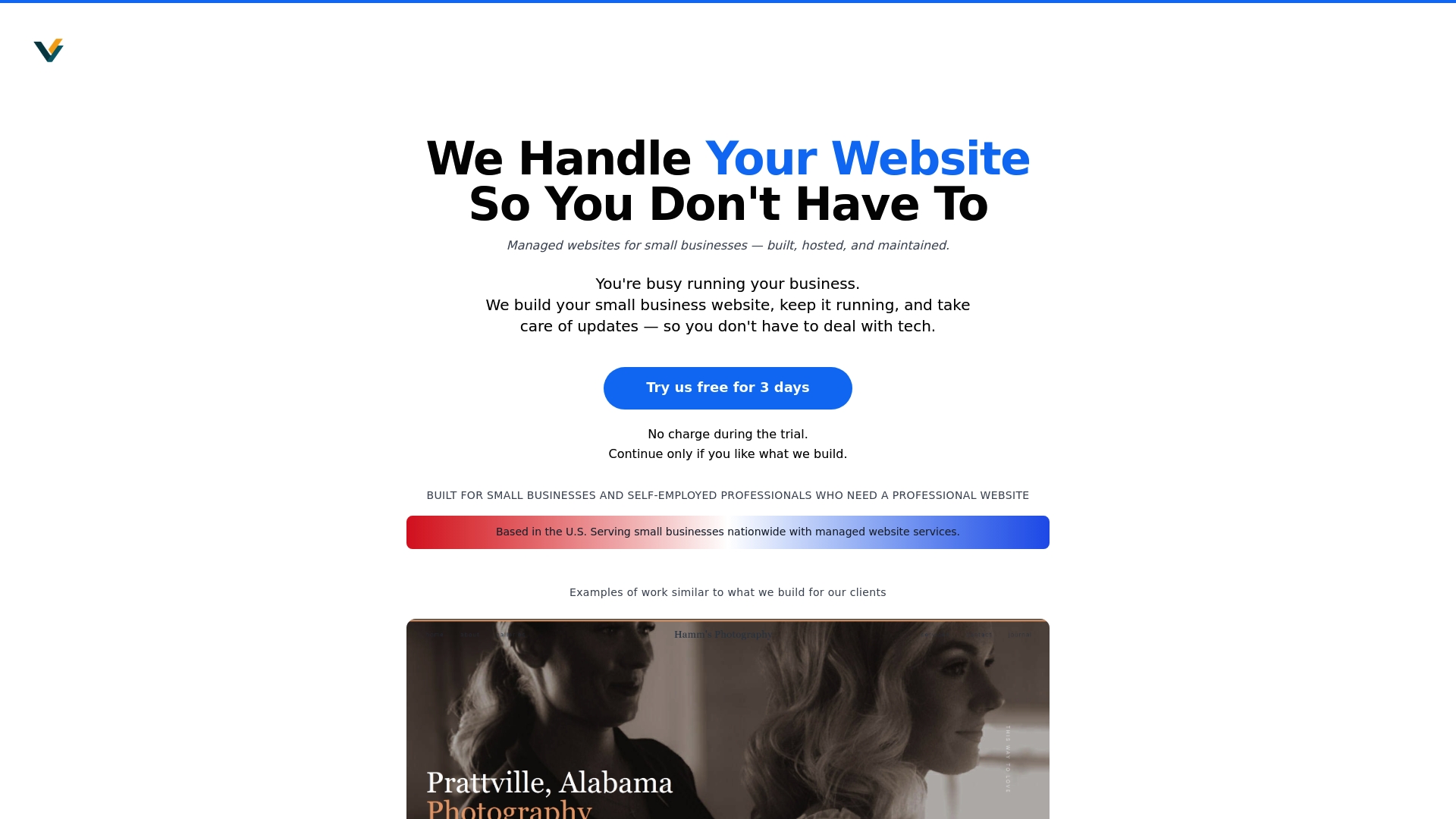
Take control of your online presence today with Vegas Solutions. We handle everything from building and hosting to ongoing website maintenance so you can focus on growing your business. Start your refundable $69 demo and experience stress-free, expert website management. Learn more about how we can keep your site safe and fresh by visiting Vegas Solutions now. Don't let an outdated website drive customers away—partner with us and let professionals keep your digital storefront inviting and secure.