

Nearly 88 percent of American consumers search online for local businesses before making a purchase decision. For small business owners, building a credible online presence is more than just a modern trend, it is essential for attracting customers and gaining trust. This guide lays out what transforms a business website from a basic page into your digital headquarters, helping you showcase your expertise and connect with customers, all while keeping tech headaches to a minimum.
Table of Contents
- Defining A Website For Business Success
- Website Variations And Real-World Uses
- Core Features That Drive Value Online
- How Websites Build Trust And Brand Authority
- Comparing Websites With Social Media Alone
- Avoiding Costly Mistakes And Common Pitfalls
Key Takeaways
| Point | Details |
|---|---|
| Importance of a Website | A business website is essential for establishing brand presence and credibility. It functions as a 24/7 digital storefront that enables customer engagement and information dissemination. |
| Core Features | Effective websites incorporate responsive design, intuitive navigation, and clear calls-to-action to enhance user experience and drive conversions. |
| Building Trust | Trust-building elements such as customer testimonials and professional design are key to transforming casual visitors into loyal customers. |
| Website vs. Social Media | A dedicated website offers greater control over branding and functionality compared to social media, making it a crucial component of an effective online strategy. |
Defining a Website for Business Success
A business website is more than just an online brochure - it's your digital headquarters where potential customers learn about your brand, services, and unique value proposition. Professional websites improve online credibility by providing a centralized platform for customer interaction and information sharing.
At its core, a business website serves as a 24/7 digital storefront that operates continuously, enabling customers to discover your offerings regardless of time or location. Unlike social media platforms where you're limited by platform rules, a dedicated website gives you complete control over your brand's narrative, design, and customer experience. This means you can showcase your products, highlight your expertise, and communicate your business's personality exactly how you want.
Successful business websites share key characteristics that transform them from simple web pages into powerful marketing tools. These include clear navigation, compelling content, mobile responsiveness, and strategic design that guides visitors toward taking specific actions - whether that's making a purchase, scheduling a consultation, or learning more about your services. Creating a professional online presence requires understanding your target audience's needs and designing an experience that speaks directly to them.
Pro tip: Start by mapping out your ideal customer's journey and design your website to answer their most pressing questions and solve their specific problems.
Website Variations and Real-World Uses
Websites have evolved far beyond simple digital brochures, emerging as powerful tools that serve diverse business needs across multiple industries. From e-commerce platforms to informational repositories, scholarly communication hubs support complex knowledge sharing that connect professionals and organizations worldwide.
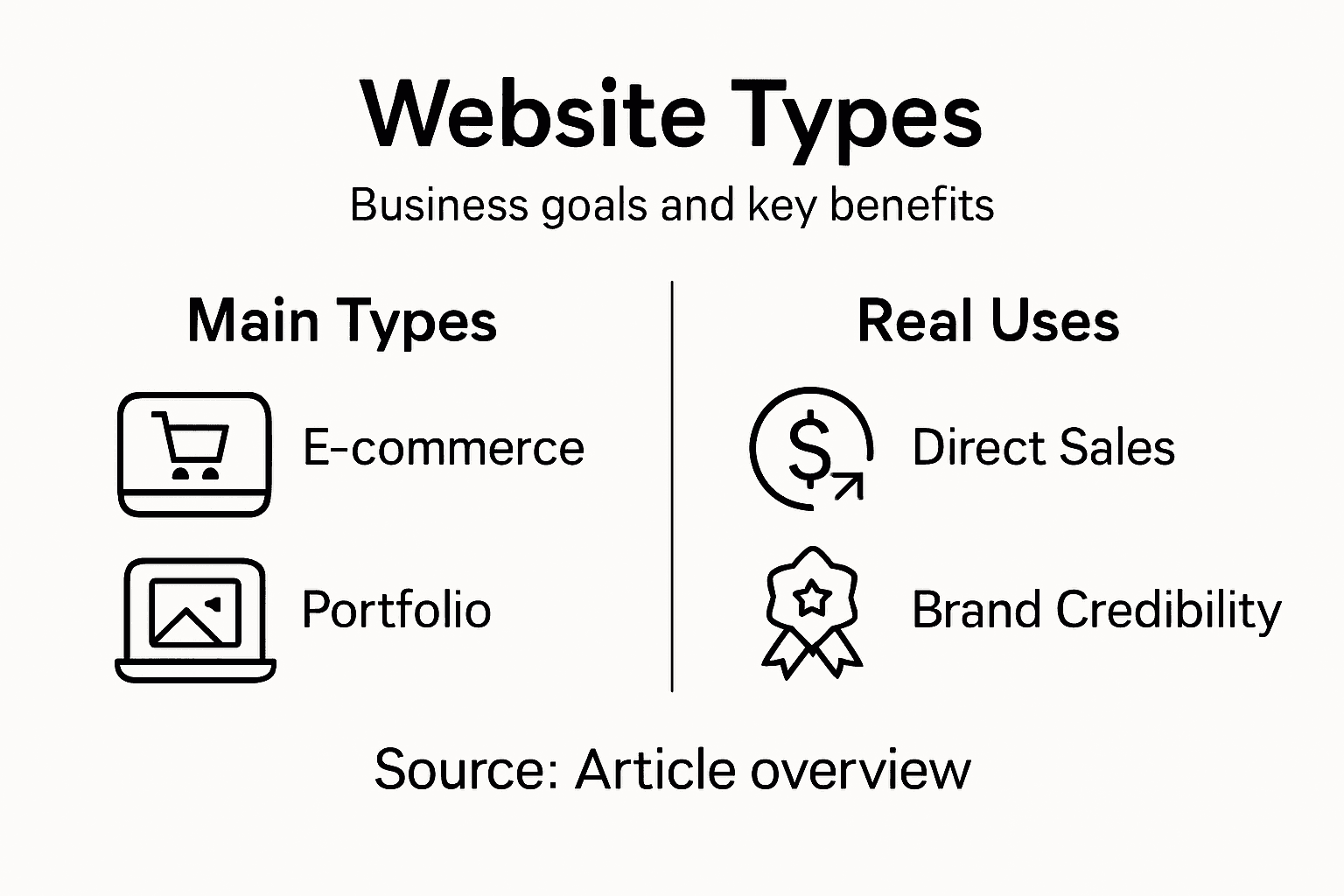
Different types of websites cater to specific business objectives. E-commerce sites enable direct product sales, portfolio websites showcase professional work, blog platforms establish thought leadership, and service-oriented sites provide detailed information about company offerings. Nonprofit organizations use websites to share mission statements, accept donations, and communicate impact, while educational institutions leverage web platforms to distribute resources, announce events, and engage with students and researchers.
Beyond traditional uses, modern websites integrate advanced functionalities that transform how businesses interact with customers. Interactive features like live chat, booking systems, customer portals, and real-time support mechanisms create seamless digital experiences. Academic search engines demonstrate websites' potential as sophisticated information management systems that can aggregate, organize, and distribute complex content efficiently.
Pro tip: Select a website type that precisely matches your specific business goals, and design each feature with your target audience's exact needs in mind.
Here's a summary of popular business website types and their main advantages:
| Website Type | Primary Objective | Key Benefit |
|---|---|---|
| E-commerce | Sell products online | 24/7 revenue stream |
| Portfolio | Showcase work samples | Attract new clients |
| Blog/Thought Leader | Share expertise | Build industry trust |
| Service-Based | Explain offerings | Boost conversion rates |
| Nonprofit | Enable donations | Expand community reach |
| Educational | Distribute resources | Engage target audience |
Core Features That Drive Value Online
A powerful business website goes beyond mere visual appeal, integrating strategic features that directly impact customer engagement and conversion rates. Core functionality transforms a simple web page into a dynamic business asset that works continuously to attract, inform, and convert potential clients.

The most effective websites incorporate several critical components that drive online value. These include responsive design that adapts seamlessly across mobile and desktop devices, intuitive navigation that guides visitors effortlessly, and clear call-to-action buttons that prompt immediate engagement. Interactive user experience design helps businesses create digital platforms that not only look professional but actively support sales and communication objectives.
Key features that elevate a website's effectiveness include integrated contact forms, customer testimonial sections, real-time chat support, and performance-tracking analytics. Each element serves a specific purpose - contact forms capture potential leads, testimonials build trust, chat support provides immediate assistance, and analytics offer insights into visitor behavior and website performance. These features work together to create a comprehensive digital ecosystem that supports business growth and customer satisfaction.
Pro tip: Prioritize user experience by regularly testing your website's functionality from a customer's perspective and making incremental improvements based on actual user feedback.
How Websites Build Trust and Brand Authority
In the digital marketplace, a website serves as the primary mechanism for establishing credibility and connecting with potential customers. Strategic brand authority requires consistent messaging that communicates professionalism, reliability, and unique value propositions.
Trust-building elements are crucial for transforming casual website visitors into committed customers. These include transparent company information, professionally designed graphics, clear contact details, customer testimonials, and security badges that demonstrate legitimacy. Authentic content that directly addresses customer pain points helps create an emotional connection, showing that your business understands and can solve specific challenges.
Websites become powerful trust-building platforms by integrating multiple credibility signals. Enhancing online credibility involves showcasing professional achievements, displaying client success stories, maintaining an updated blog with industry insights, and presenting a consistent brand narrative across all digital touchpoints. These strategic approaches transform your website from a simple information page into a compelling testament to your business's expertise and commitment.
Pro tip: Regularly update your website with fresh, relevant content and client testimonials to maintain a perception of active engagement and current industry knowledge.
Comparing Websites with Social Media Alone
While social media platforms offer quick visibility, they represent a limited and rented digital space that ultimately constrains business potential. Owned digital real estate - like a professional website - provides comprehensive control, deeper brand storytelling, and more sophisticated marketing capabilities that social media cannot match.
Social media channels impose significant restrictions that can hinder business growth. These platforms control algorithmic reach, change rules arbitrarily, and limit your ability to customize user experience. Professional online presence requires a dedicated website that allows complete design flexibility, robust analytics, and direct customer engagement without intermediary platform limitations.
Unlike social media pages, websites offer complete brand sovereignty. They enable advanced features like integrated payment systems, comprehensive customer databases, personalized user journeys, and sophisticated conversion tracking. Social media serves as a supplemental marketing channel, but a website functions as your digital headquarters - a permanent, professional space where potential customers can deeply understand your business value, explore your offerings, and make informed purchasing decisions without distractions.
Pro tip: View social media as a marketing bridge that directs traffic to your website, not as a standalone business platform.
This table compares control and functionality between websites and social media platforms:
| Aspect | Professional Website | Social Media Platform |
|---|---|---|
| Brand Control | Fully customizable design | Limited by platform rules |
| Analytics | Advanced, tailored insights | Basic engagement metrics |
| Customer Data | Direct ownership and security | Restricted access |
| Integration | Supports complex features | Minimal custom options |
| Longevity | Permanent digital presence | Subject to platform changes |
Avoiding Costly Mistakes and Common Pitfalls
Website development requires strategic planning to prevent expensive errors that can undermine your business's online credibility. Small businesses frequently encounter technical and strategic pitfalls that can drain resources and compromise their digital effectiveness.
Common mistakes include selecting inappropriate website platforms, overlooking mobile responsiveness, and neglecting basic search engine optimization principles. Professional website strategies demand careful consideration of design, functionality, and user experience. Businesses often make critical errors like cluttered page layouts, slow loading times, confusing navigation, and inconsistent branding that can instantly turn potential customers away.
Technical vulnerabilities represent another significant risk zone for small business websites. Inadequate security measures, outdated software, poor hosting choices, and lack of regular maintenance can expose businesses to cybersecurity threats, performance issues, and potential data breaches. Successful websites require ongoing monitoring, strategic updates, and a proactive approach to digital infrastructure that anticipates potential challenges before they become costly problems.
Pro tip: Invest in periodic website audits that comprehensively review technical performance, user experience, and security protocols to identify and address potential issues before they escalate.
Unlock Your Small Business Growth With a Website That Does It All
The article highlights the challenge of managing a professional website that builds trust, boosts conversions, and captures customer engagement without technical headaches. If you feel overwhelmed by choosing the right platform, ensuring mobile responsiveness, or keeping your site secure and updated, you are not alone. Small businesses often face these pitfalls but also want clear navigation, compelling content, and features that truly connect with customers.
Vegas Solutions removes these obstacles for you by building, hosting, and maintaining your website so you can focus on growing your business. We deliver a fully handled digital presence that integrates customer-focused design and strategic functionality. With one point of contact and simple language, we eliminate confusion so you get a site that works tirelessly for your brand's authority and sales.
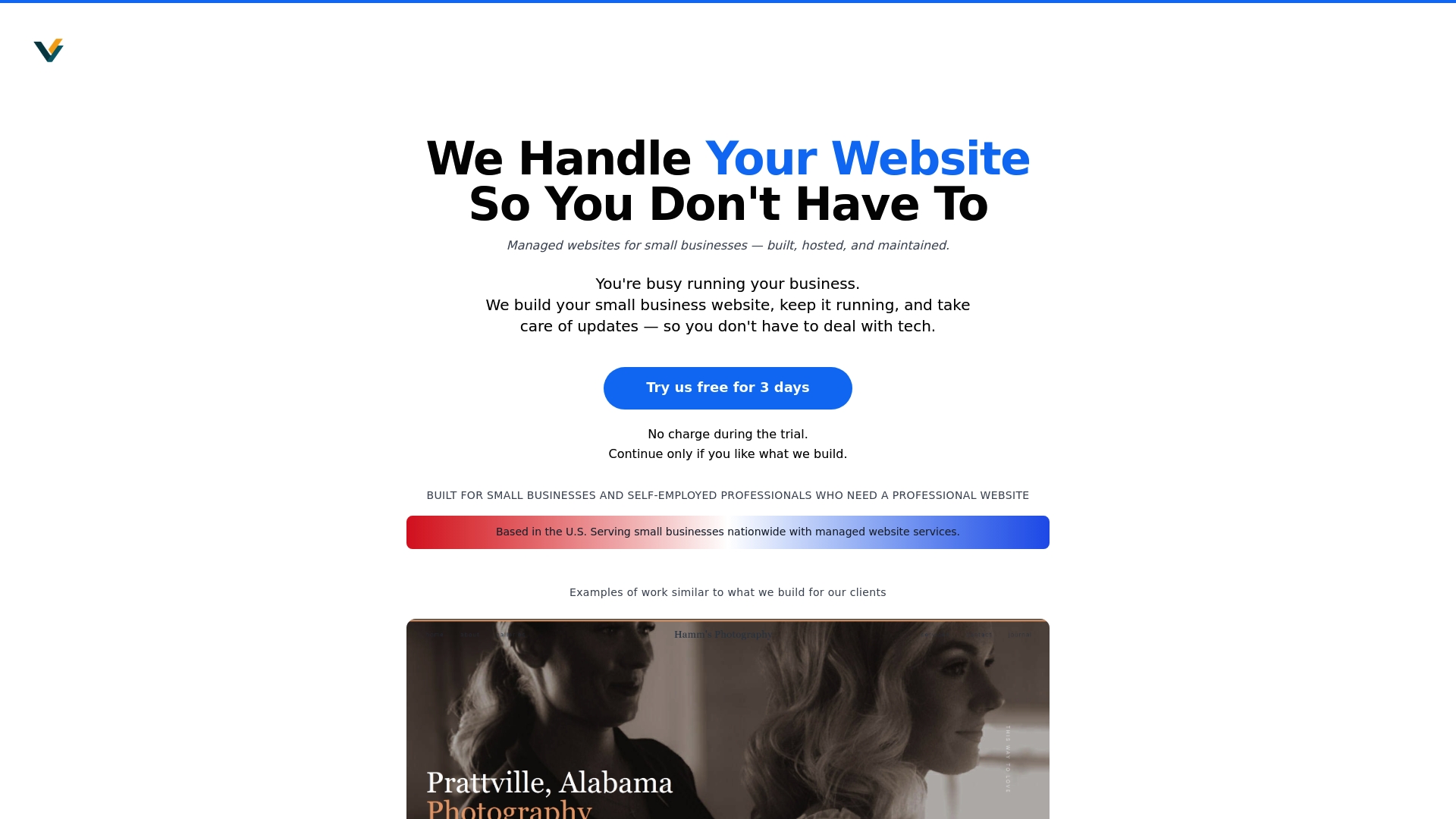
Ready to experience a website that transforms your business pain points into profit drivers? Visit Vegas Solutions today to request a $69 custom demo and see why a professional, fully supported website is the best investment you can make for your small business. Don't let tech obstacles hold you back. Take the next step toward online success now at Vegas Solutions and start building your trustworthy digital headquarters.