

Understanding website speed and its importance
Website speed refers to how quickly your pages load and become fully interactive for visitors. Google measures this through Core Web Vitals, three specific metrics that evaluate loading performance, interactivity, and visual stability. These metrics are Largest Contentful Paint (LCP), which measures how long it takes for the main content to appear, Interaction to Next Paint (INP), which tracks how quickly your site responds to user actions, and Cumulative Layout Shift (CLS), which monitors unexpected layout movements that frustrate users.
Recent data shows 48% of mobile websites and 56% of desktop websites pass all three Core Web Vitals, meaning roughly half of all sites fail to meet basic performance standards. This represents a massive opportunity for small businesses willing to prioritize speed improvements. When your competitors struggle with slow loading times, a fast website becomes your competitive advantage.
Speed matters because it directly affects every aspect of your online presence. Search engines like Google use Core Web Vitals as ranking factors, so faster sites appear higher in search results and attract more organic traffic. Users judge your credibility within milliseconds based on loading speed, and slow sites signal unprofessionalism or outdated technology. Conversion rates drop sharply as load times increase, with each additional second potentially costing you customers who abandon your site for faster alternatives. Understanding website performance impact helps you recognize why speed deserves immediate attention.
The three Core Web Vitals components measure distinct aspects of user experience:
- Largest Contentful Paint (LCP) tracks when the largest visible element loads, with good performance under 2.5 seconds
- Interaction to Next Paint (INP) measures responsiveness to clicks and taps, targeting under 200 milliseconds
- Cumulative Layout Shift (CLS) quantifies visual stability, aiming for scores below 0.1 to prevent annoying content jumps
Mastering these metrics transforms your website from a digital brochure into a powerful business tool that actively generates leads and sales.
The biggest challenges and how they affect your performance
Time to First Byte (TTFB) represents the foundation of all website speed improvements. This metric measures how long your server takes to begin sending data after receiving a request. When TTFB exceeds 200 milliseconds, every other performance metric suffers because nothing can load until the server responds. TTFB should be under 200ms with proper caching, with Google targeting under 800ms, but many small business websites struggle with response times over one second due to poor hosting or missing optimization.
Core Web Vitals passing rates reveal which metrics cause the most failures. Current data shows CLS passes on about 78% of sites, INP passes on roughly 71% of sites, but LCP is the bottleneck with only 62% passing, dragging overall pass rates down significantly. This means Largest Contentful Paint represents your biggest opportunity for improvement since it's the weakest link in most website performance chains.

Slow LCP typically results from several common causes that compound each other. Oversized images without compression or modern formats like WebP add unnecessary load time. Server response delays cascade into everything else since the browser can't start rendering until it receives initial HTML. Render blocking resources like CSS and JavaScript files prevent the browser from displaying content while it downloads and processes these files. Missing resource hints fail to tell browsers which assets to prioritize, causing inefficient loading sequences.
The impact on user perception happens faster than you might expect. Visitors form opinions about your business within 50 milliseconds of seeing your site, and slow loading confirms negative assumptions about reliability or professionalism. When the main content takes over 2.5 seconds to appear, users often assume the page has failed and navigate away before seeing your message. This creates a vicious cycle where poor performance prevents you from demonstrating your actual value to potential customers.
Prioritizing fixes in the correct order saves enormous time and effort. Optimizing JavaScript before addressing server response time wastes resources because slow TTFB undermines all downstream improvements. Following the proven sequence of TTFB first, then LCP, then INP, then CLS ensures each optimization builds on a solid foundation. This approach explained in our business website optimization guide delivers faster results with less trial and error.
Pro Tip: Implement browser caching and server-side caching simultaneously to cut TTFB by 60-80% within hours. This single change often improves LCP scores immediately since faster server response accelerates everything downstream, and you can verify improvements using free tools like Google PageSpeed Insights or WebPageTest.
How to improve website speed effectively: A step-by-step workflow
Successful speed optimization follows a specific sequence that maximizes efficiency and minimizes wasted effort. Starting with foundational issues and progressing to fine-tuning ensures each step builds on previous improvements rather than fighting against underlying problems. This workflow has helped thousands of websites move from failing to passing all Core Web Vitals metrics systematically.
Follow this prioritized sequence for optimal results:
- Optimize Time to First Byte (TTFB) by implementing caching, upgrading to quality hosting, and using a content delivery network (CDN) to serve assets from locations closer to your visitors
- Fix Largest Contentful Paint (LCP) by compressing images, converting to modern formats like WebP, implementing lazy loading for below-the-fold content, and preloading critical resources
- Improve Interaction to Next Paint (INP) by reducing JavaScript execution time, removing unused code, deferring non-critical scripts, and breaking up long tasks that block the main thread
- Eliminate Cumulative Layout Shift (CLS) by specifying image and video dimensions in HTML, reserving space for ads and embeds, and avoiding inserting content above existing elements during page load
- Monitor progress using real-user data from Chrome User Experience Report (CrUX) rather than relying solely on lab testing tools that don't reflect actual visitor experiences
Timelines for seeing measurable improvements depend on both your implementation speed and data collection cycles. Sites that followed the TTFB → LCP → INP → CLS workflow improved from failing to passing all metrics in about 4 to 6 weeks, which includes time for Google to collect sufficient real-user data through Chrome browsers. Lab scores from tools like Lighthouse improve immediately after changes, but CrUX data that affects search rankings updates based on 28-day rolling averages of actual visitor experiences.
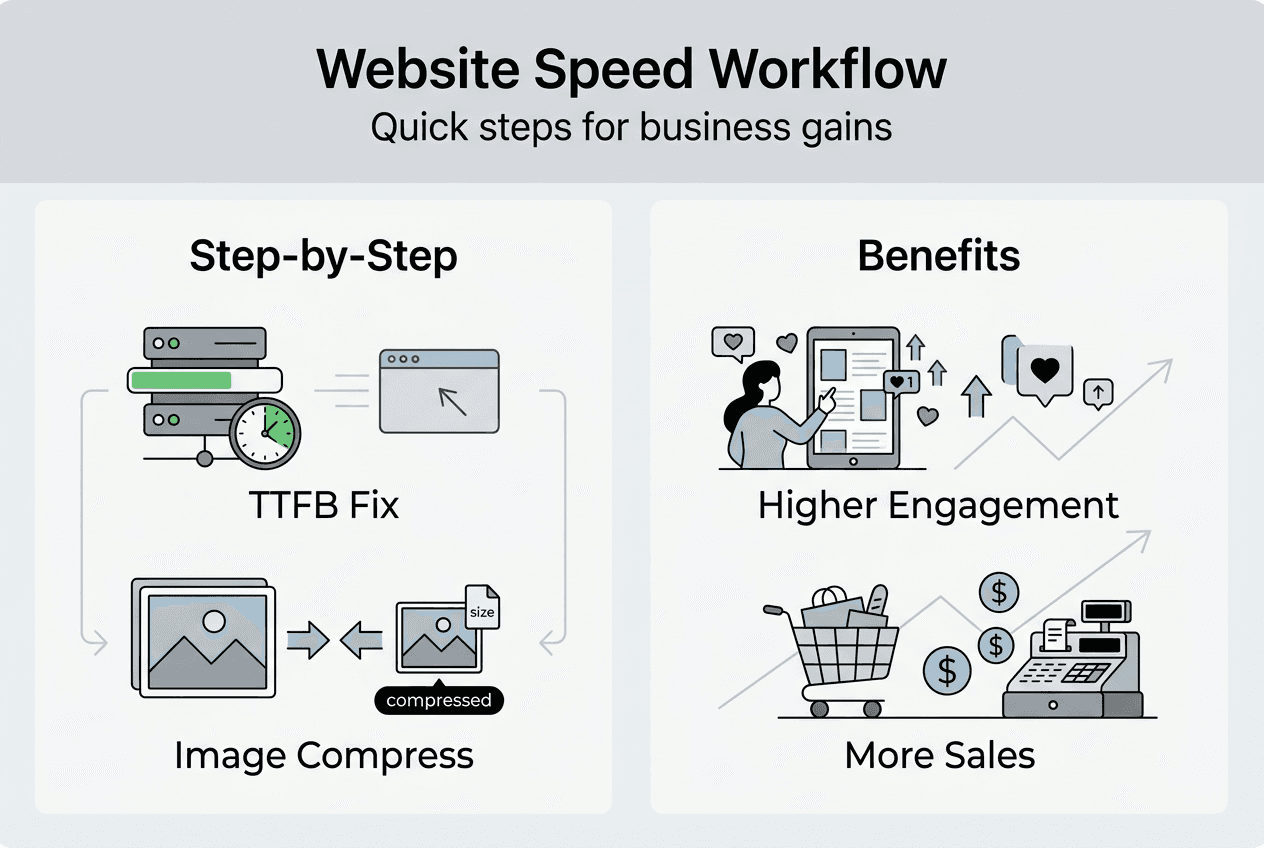
Skipping foundation steps like TTFB optimization increases total time and effort significantly. When you optimize images before fixing server response time, you might see minimal improvement because slow TTFB still delays everything. Then you waste time troubleshooting why image optimization didn't work as expected, only to eventually discover the server issue and have to revisit previous optimizations. Following the correct sequence prevents this frustrating cycle.
Practical tips accelerate improvements at each stage. For TTFB, switch to professional web hosting benefits that include server-level caching and CDN integration rather than struggling with budget shared hosting. For LCP, use tools like Squoosh or TinyPNG to compress images before uploading, and consider lazy loading images that appear below the initial viewport. For INP, audit your plugins and remove any that add heavy JavaScript without providing essential functionality.
Pro Tip: Use Google Search Console's Core Web Vitals report to identify which pages fail specific metrics, then focus optimization efforts on your highest-traffic pages first for maximum business impact. This targeted approach delivers measurable improvements faster than trying to fix every page simultaneously, and you can expand to additional pages once you've perfected your workflow on priority content.
Business benefits of a fast website and real-world impacts
Faster websites translate directly into measurable business outcomes that affect your bottom line. When pages load quickly and respond instantly to clicks, visitors stay longer, explore more content, and complete desired actions at higher rates. These improvements compound over time as better user experiences lead to more referrals, repeat visits, and positive reviews that attract additional customers.
Key benefits for small businesses include:
- Improved search engine rankings that increase organic traffic without additional advertising costs
- Lower bounce rates as visitors stay engaged instead of abandoning slow-loading pages
- Higher conversion rates when checkout processes and contact forms respond instantly
- Enhanced mobile experience that captures the growing majority of web traffic
- Increased credibility and trust from professional performance that signals reliability
- Better return on marketing investment when paid traffic converts more efficiently
Visitor behavior changes dramatically based on loading speed. Research shows 53% of mobile users abandon sites that take over three seconds to load, and each additional second of delay reduces conversions by an average of 7%. These statistics aren't abstract numbers, they represent real customers who never see your services because slow performance drove them to competitors. For a small business generating $50,000 monthly online, a one-second delay could cost $3,500 per month in lost revenue.
Small businesses competing online gain specific advantages from speed optimization. Local service providers can outrank larger competitors in search results by delivering superior user experiences. E-commerce stores can increase average order values when product pages load instantly and checkout flows respond smoothly. Professional services firms can convert more consultation requests when contact forms submit without delays or errors. These competitive edges matter most in crowded markets where customers have multiple options.
Speed optimization isn't just about technology, it's about respecting your visitors' time and demonstrating the same professionalism online that you provide in person.
Understanding professional website services benefits helps you recognize that speed represents just one aspect of comprehensive online presence management. However, it's often the most impactful aspect because it affects every visitor regardless of your content quality or design appeal. The benefits of professional websites extend beyond aesthetics to include performance optimization that actively drives business growth.
Boost your site speed and business growth with Vegas Solutions
If you're ready to transform your website from a slow liability into a fast asset that actively generates business, Vegas Solutions handles everything for you. We build, host, and maintain websites specifically optimized for speed and performance, so you never worry about technical details or Core Web Vitals scores. Our approach starts with understanding your business goals, then we create a custom website that loads instantly, ranks well, and converts visitors into customers consistently.
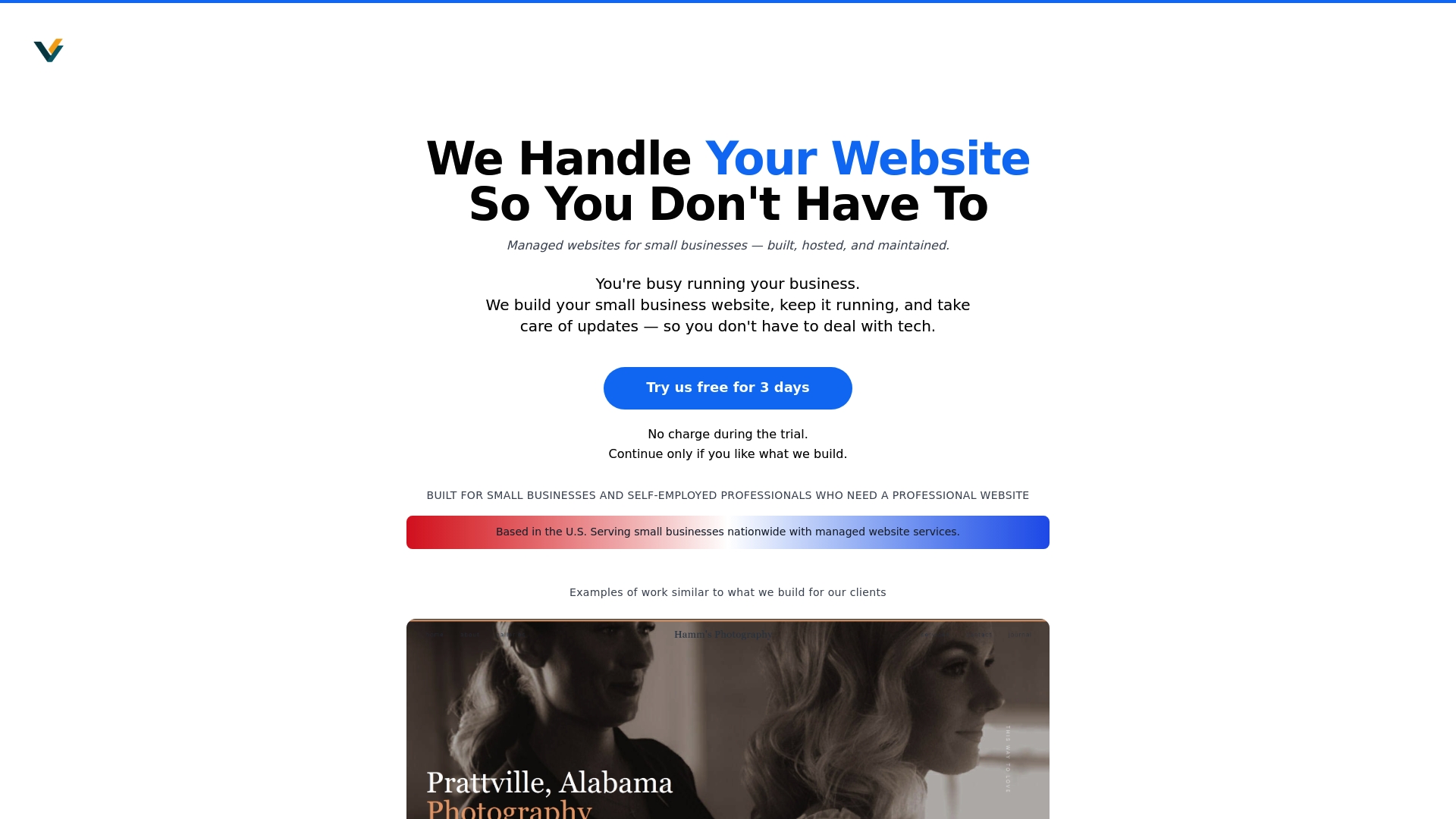
Our monthly website services include ongoing performance monitoring and optimization, ensuring your site maintains excellent speed as content grows and technology evolves. We handle updates, security, hosting, and all technical maintenance through one simple point of contact, eliminating the headaches of coordinating multiple vendors or learning complex platforms yourself. Check our website service pricing to see transparent options that fit small business budgets, or explore our Montgomery AL website design services for local businesses seeking comprehensive solutions. Contact us today to discuss how we can build or optimize your website for maximum speed and business impact.