

Nearly half of all small businesses in the U.S. have experienced a cyberattack in the past five years, yet many owners still believe website security is only for large corporations with deep pockets. This misconception puts customer data, business reputation, and financial stability at serious risk. Website security isn’t a luxury or an IT checkbox. It’s a fundamental business practice that protects your livelihood, builds customer trust, and prevents devastating breaches that can cost upwards of $200,000. This article will show you why prioritizing website security matters, what threats you face without it, and practical steps you can take today to safeguard your business and customers.
The real risks small businesses face without website security
Small business owners often assume cybercriminals target only Fortune 500 companies with massive databases. The reality is starkly different. 43% of U.S. small and medium-sized businesses experienced a cyberattack in the past five years, and 81% reported a security breach in the past year alone. These aren’t isolated incidents. They’re part of a growing trend where hackers deliberately target smaller operations because they often lack robust defenses.
The types of attacks vary, but the most common include ransomware that locks you out of your own data, phishing emails that trick employees into revealing passwords, and vulnerabilities in outdated plugins that provide easy entry points. Each of these exploits weaknesses in website security small businesses often overlook. When attackers succeed, the financial toll is immediate and severe. Data breaches cost small businesses between $120,000 and $200,000 on average, covering everything from forensic investigations to legal fees, customer notification costs, and lost revenue.
Beyond the financial hit, the operational damage can be fatal. 60% of small businesses close within six months after a major cyberattack. Why? Because customer trust evaporates overnight when personal information is compromised. Reputational damage spreads fast through online reviews and word of mouth, making recovery nearly impossible for businesses operating on thin margins.
Common attack vectors include:
- Unpatched content management systems and plugins that hackers scan for automatically
- Weak or reused passwords that are easily guessed or obtained from previous breaches
- Phishing emails targeting employees or contractors with access to sensitive systems
- Lack of encryption allowing data interception during transmission
“The biggest mistake small business owners make is thinking they’re too small to be a target. Cybercriminals know smaller companies often have weaker defenses, making them easier and faster to exploit.”
Cyberattacks exploit both technical vulnerabilities and human error. An employee clicking a malicious link or using the same password across multiple accounts can open the door to your entire operation. Without proactive website security measures, you’re gambling with your business’s future every single day.
How website security protects your business and customers
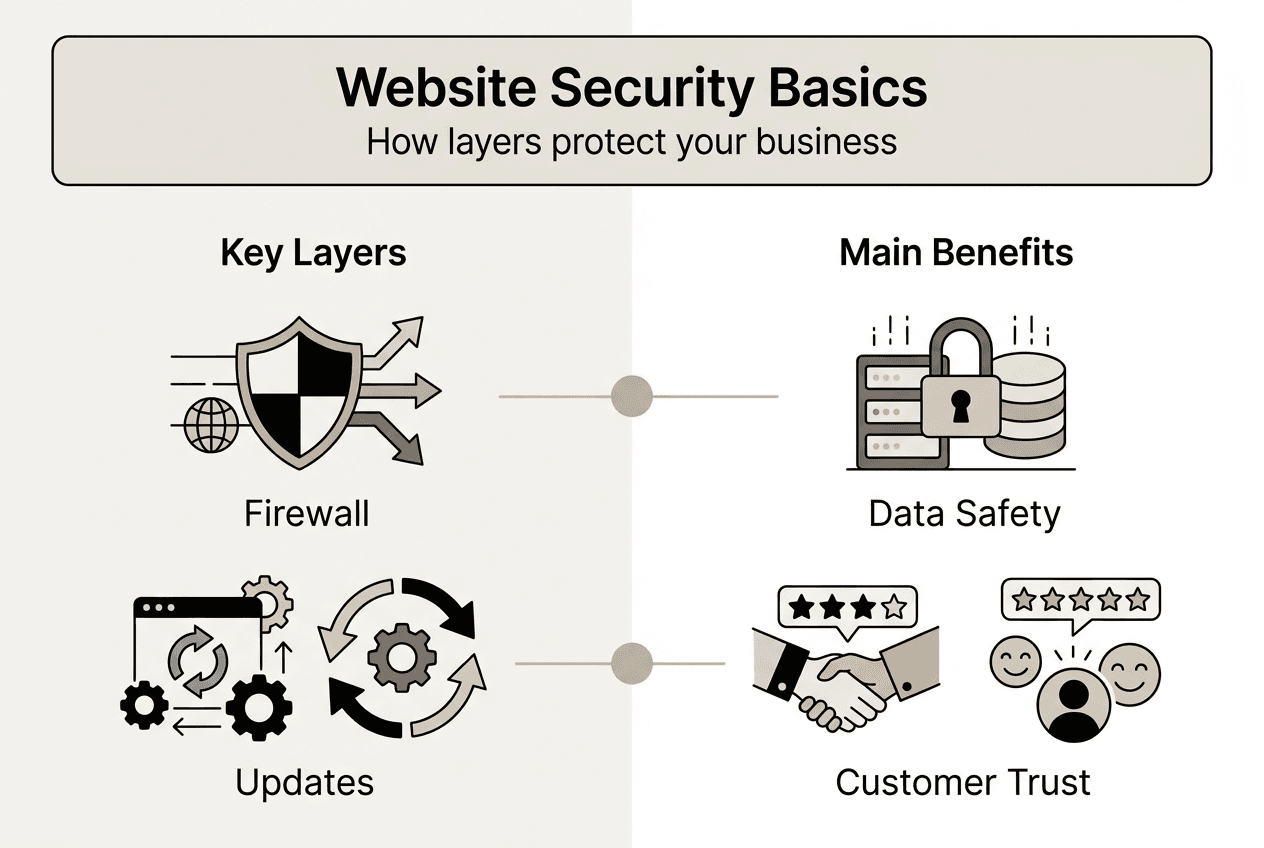
Website security isn’t just about preventing attacks. It’s about building a foundation of trust with your customers and ensuring your business operates smoothly without disruption. When you implement security measures, you’re protecting sensitive data like credit card numbers, email addresses, and personal information from being intercepted or stolen. Encryption through HTTPS is the first line of defense, scrambling data during transmission so even if hackers intercept it, they can’t read it.
Regular updates to your content management system, plugins, and themes close security gaps before attackers can exploit them. Outdated software is one of the easiest entry points for cybercriminals because vulnerabilities are publicly documented once patches are released. If you’re not updating regularly, you’re essentially leaving your front door unlocked. Ongoing website support ensures these updates happen consistently without you having to remember or manage them manually.
Secure websites also rank higher in search results. Google prioritizes sites with HTTPS encryption, giving you a tangible SEO boost simply by implementing basic security. On the flip side, browsers display “Not Secure” warnings for sites without HTTPS, which immediately erodes customer confidence. Imagine a potential client landing on your site only to see a warning that their information might not be safe. They’ll leave before you even get a chance to make your pitch.
Key protective mechanisms include:
- SSL/TLS certificates that encrypt data between your website and visitors
- Firewalls that block malicious traffic before it reaches your server
- Regular malware scans that detect and remove threats proactively
- Access controls that limit who can make changes to your site
Pro Tip: Schedule regular website reviews quarterly to catch security issues early. A quick audit of plugins, user permissions, and backup integrity can prevent major headaches down the line.
Basic layered security reduces breach risk dramatically without requiring a massive budget or dedicated IT staff. Think of it like locking your car doors and parking in a well-lit area. These simple steps won’t stop a determined professional thief, but they’ll deter the vast majority of opportunistic criminals who move on to easier targets. The same principle applies online. When you combine HTTPS, regular updates, strong passwords, and reliable backups, you create multiple barriers that make your site far less appealing to attackers.
Balancing cost and protection: practical security steps for small businesses
One of the biggest myths holding small business owners back is the belief that effective cybersecurity requires enterprise-level budgets and dedicated IT teams. This simply isn’t true. Basic layered security measures are affordable, accessible, and far more effective than expensive tools that sit unused because they’re too complex to manage. The key is focusing on fundamentals that address the most common threats rather than chasing perfect protection against every possible scenario.
Good enough security outperforms unused enterprise tools every time. A small business that consistently updates plugins, uses strong passwords, and maintains tested backups is significantly more secure than one that purchased a costly security suite but never configured it properly. Cyber insurance can provide a financial safety net, but it’s not a substitute for proactive security. Policies often have exclusions for preventable breaches caused by negligence like failing to update software or using default passwords.
A monthly security routine tailored for self-employed professionals and small business owners ensures continuity without requiring technical expertise. Here’s a practical checklist you can implement immediately:
- Review and update passwords for all accounts, using a password manager to generate and store strong, unique credentials.
- Check for and install updates to your website’s CMS, plugins, themes, and hosting environment.
- Run a complete backup of your website and database, storing copies in multiple locations including offsite or cloud storage.
- Review user access permissions, removing accounts for former employees or contractors who no longer need access.
- Test your most recent backup by attempting a restore on a staging environment to confirm it actually works.
Pro Tip: Set a recurring calendar reminder for the first Monday of each month to run through this checklist. Consistency matters more than perfection, and dedicating 30 minutes monthly prevents hours of crisis management later.
| Approach | Cost | Effectiveness | Best For |
|---|---|---|---|
| Enterprise security suite | $500-$2000/year | Low if unused | Large teams with dedicated IT staff |
| Basic layered security | $0-$300/year | High with consistent use | Small businesses and self-employed professionals |
| Professional management | $50-$200/month | Very high | Owners wanting hands-off security |
The comparison makes it clear that throwing money at security doesn’t guarantee better protection. What matters is consistent execution of fundamental practices. Free SSL certificates through Let’s Encrypt provide the same encryption as paid options. Password managers like Bitwarden offer robust free tiers. Automated backup plugins for WordPress cost less than $100 annually. When you add professional website support, you get expert oversight ensuring these basics are maintained without consuming your time or mental energy.
The real cost isn’t in the tools themselves but in the discipline to use them consistently. Many small business owners start strong but let security practices slip when things get busy. That’s exactly when vulnerabilities creep in. Professional website services remove this burden entirely, handling updates, backups, and monitoring as part of ongoing maintenance so you can focus on running your business.
Emerging threats and why staying vigilant matters in 2026
The cybersecurity landscape evolves constantly, with attackers developing new methods to exploit vulnerabilities faster than many small businesses can adapt. In 2026, AI-powered attacks appeared in 41% of reported incidents affecting small and medium-sized businesses. These sophisticated attacks use machine learning to identify patterns in your security, craft convincing phishing emails, and automate the discovery of unpatched systems at scale. What once required skilled hackers now happens automatically, increasing both the frequency and effectiveness of attacks.
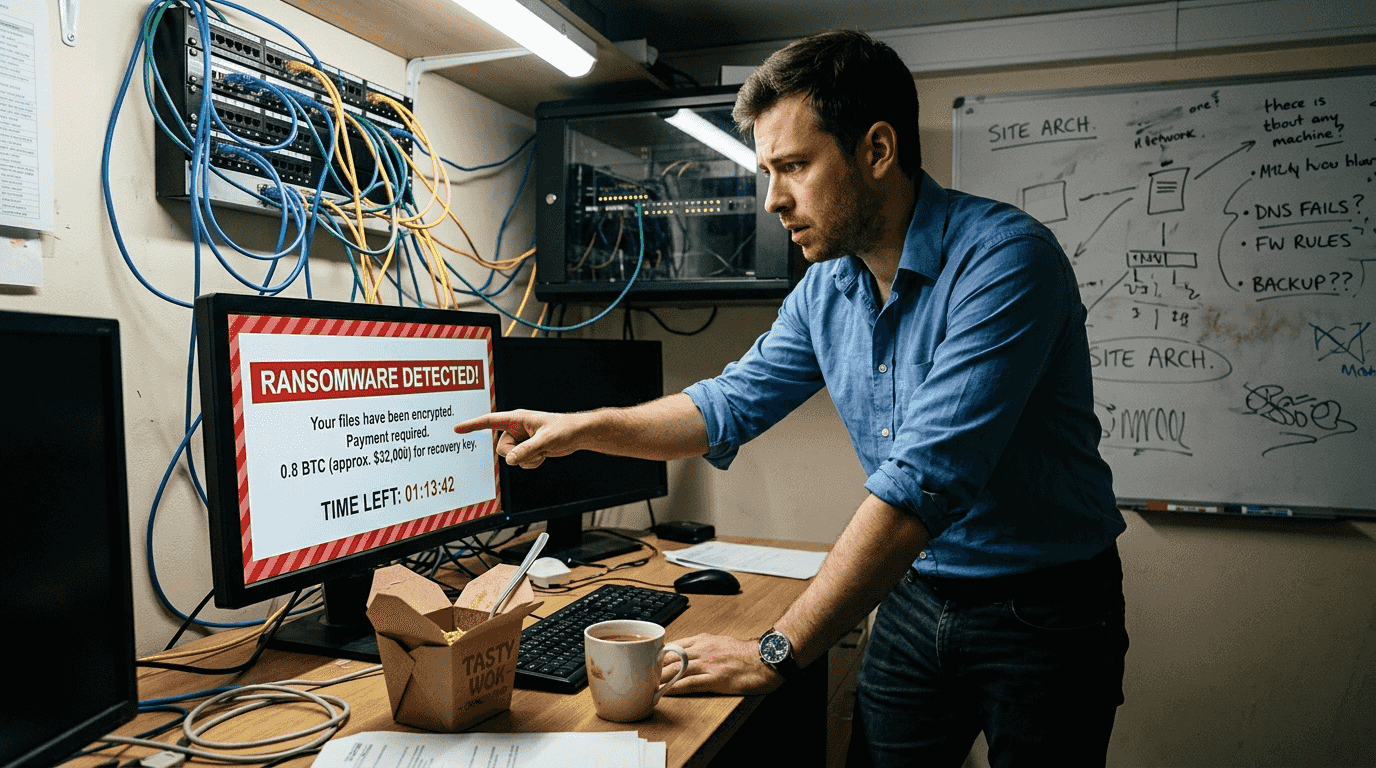
Ransomware remains one of the most devastating threats, with 88% of breaches involving unpatched content management systems or plugins. Attackers specifically target known vulnerabilities in popular WordPress plugins, Joomla extensions, and other widely used tools because they know many site owners delay updates. Once inside, ransomware encrypts your files and demands payment for the decryption key. Shockingly, 12% of small businesses paid the ransom because they lacked tested backups and had no other way to recover their data.
Supply chain compromises add another layer of risk. When a plugin developer’s account gets hacked or a hosting provider experiences a breach, the impact cascades to every customer using that service. You might have perfect security practices, but if a third-party tool you depend on gets compromised, you’re vulnerable through no fault of your own. This is why choosing professional web hosting with robust security infrastructure matters more than ever.
Emerging threat vectors include:
- AI-generated phishing emails that perfectly mimic legitimate business communications
- Automated vulnerability scanners that identify and exploit unpatched systems within hours of disclosure
- Supply chain attacks targeting widely used plugins and themes to compromise thousands of sites simultaneously
- Credential stuffing using passwords leaked from unrelated breaches to access multiple accounts
“The threat landscape in 2026 isn’t just growing, it’s accelerating. Attackers use automation and AI to scale attacks that would have required teams of skilled hackers just a few years ago. Small businesses can’t afford to treat security as a one-time project anymore.”
Staying vigilant means treating security as an ongoing process rather than a checkbox you mark once and forget. Threats evolve weekly, with new vulnerabilities discovered and exploited constantly. What worked last year might leave you exposed today. Regular security updates, monitoring for suspicious activity, and maintaining current backups aren’t optional extras. They’re fundamental requirements for operating a business online in 2026.
The good news is that vigilance doesn’t require becoming a security expert yourself. Understanding the threats helps you make informed decisions, but actually maintaining security can be delegated to professionals who stay current with emerging risks and implement protections proactively. The key is recognizing that doing nothing or relying on outdated practices puts everything you’ve built at risk.
Protect your business with expert website management
You’ve seen the risks, understood the protections, and learned practical steps to secure your website. But implementing and maintaining these measures consistently while running your business is a real challenge. That’s where professional website management makes the difference. Vegas Solutions handles security updates, regular backups, and ongoing monitoring so you never have to worry whether your site is protected. We build, host, and maintain everything, giving you one point of contact for your entire online presence.
Our approach ensures your website stays secure without consuming your time or requiring technical knowledge. Automatic updates keep plugins and themes current. Daily backups protect your data with tested recovery procedures. Security monitoring catches threats before they become problems. This proactive protection reduces risk, safeguards customer data, and maintains the credibility that drives business growth. Check out our pricing options designed specifically for small businesses and self-employed professionals, or explore our website management services to see how we make security simple and affordable. If you’re in Alabama, our Montgomery website design services combine beautiful, functional design with built-in security from day one.