

Many small business owners believe their website content is finished once it goes live. This misconception costs them traffic, trust, and revenue. Search engines reward sites that publish fresh, relevant information, while visitors quickly lose confidence in businesses displaying outdated details. Refreshing your website content regularly improves search rankings, builds credibility, and drives measurable business growth. This guide explains why updating your site matters and provides actionable strategies to keep your online presence competitive and engaging throughout 2026.
Key Takeaways
| Point | Details |
|---|---|
| Regular content updates boost SEO | Regular updates signal ongoing relevance to search engines and improve rankings. |
| Fresh content builds trust | Visitors trust businesses that show current information about services, pricing, and capabilities. |
| Updates drive growth and credibility | Consistent refreshing positions your business as active, professional, and responsive to market changes. |
| Outdated content harms performance | When information becomes stale, search rankings decline, traffic drops, and trust erodes. |
| Fresh content captures new opportunities | Updated material helps you rank for emerging keywords and stay ahead of competitors. |
Why outdated website content harms your business
Search engines evaluate hundreds of factors when ranking websites, and content freshness plays a significant role in those algorithms. Sites publishing new or updated material signal active management and current relevance. When your content grows stale, search engines gradually lower your rankings because they assume your information no longer serves user needs effectively. This ranking decline reduces organic traffic, making it harder for potential customers to discover your business through search results.
User trust erodes quickly when visitors encounter outdated information. A copyright date from three years ago, expired promotions, or references to discontinued services create immediate doubt about your business reliability. Potential customers question whether you are still operating, if your contact information remains valid, or if your pricing reflects current rates. These trust issues drive visitors away before they engage with your offerings. Outdated website content decreases SEO performance and user engagement, creating a cycle of declining visibility and lost opportunities.
Stale content also prevents you from capturing emerging search opportunities. As customer needs evolve and new industry terms gain popularity, your static pages miss chances to rank for valuable keywords. Competitors publishing fresh content about current trends capture traffic you could have earned. This visibility gap compounds over time, widening the competitive distance between your business and more active rivals. Understanding these real benefits of website updates helps prioritize content refreshes as a core business activity.
The financial impact extends beyond lost traffic. Lower search rankings require increased advertising spend to maintain visibility. Reduced conversion rates from trust issues mean you need more visitors to generate the same revenue. Missed keyword opportunities limit your market reach and customer acquisition potential. These cumulative effects make outdated content one of the most expensive mistakes small businesses make with their online presence.
Core benefits of refreshing your website content regularly
Updating your website content delivers immediate and long term advantages that strengthen your market position. Search engines respond quickly to fresh content by recrawling your pages and reassessing their relevance. This renewed attention often produces ranking improvements within weeks, driving increased organic traffic without additional advertising costs. Refreshing content can significantly boost search rankings and customer engagement, creating sustainable growth momentum.
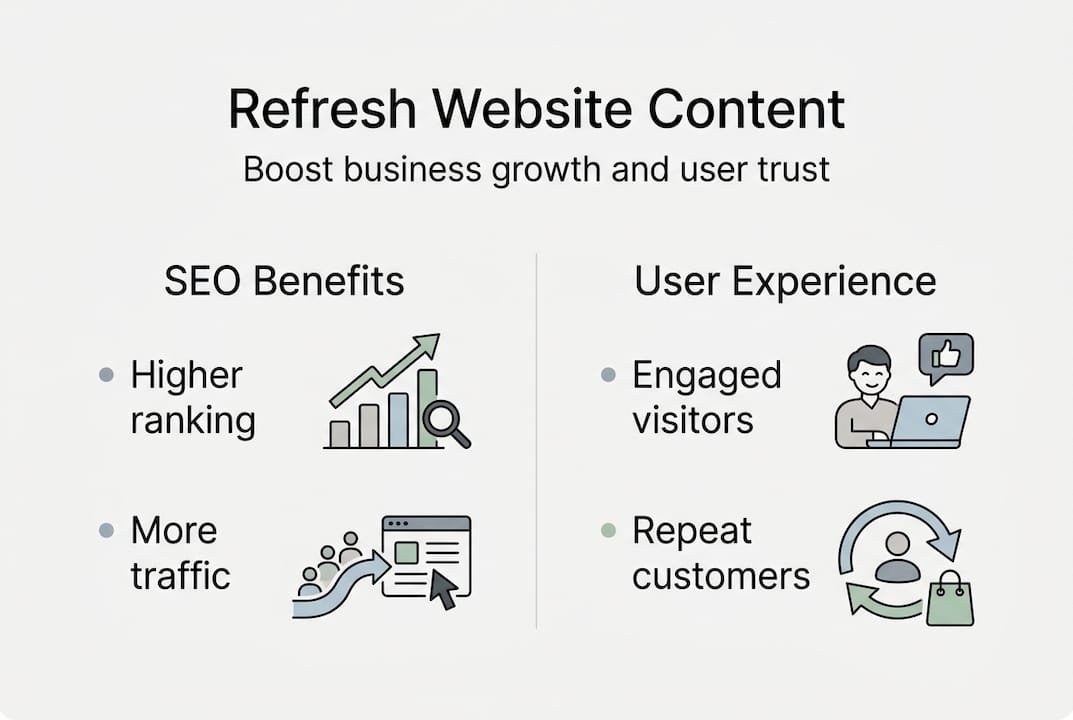
Enhanced user experience represents another major benefit of regular content updates. Visitors spend more time on sites offering current, relevant information that addresses their immediate needs. Updated service descriptions, recent case studies, and current pricing details help potential customers make confident decisions faster. This improved experience increases conversion rates while reducing bounce rates, sending positive engagement signals that further boost your search rankings.

Regular refreshes help your business adapt to market changes and customer expectations. New services, updated processes, or shifted focus areas need reflection in your website content. Seasonal promotions, industry trends, and competitive positioning require ongoing content adjustments. These updates ensure your site accurately represents your current capabilities and value proposition. Following a comprehensive content creation guide 2026 approach ensures your updates align with current best practices.
Brand authority grows stronger when your content demonstrates ongoing expertise and market awareness. Publishing updated insights, addressing emerging customer questions, and showcasing recent successes position your business as an active industry participant. This authority building creates competitive differentiation that attracts higher quality leads and supports premium pricing. Understanding the SEO role for service businesses clarifies how content freshness contributes to overall search performance.
Pro Tip: Schedule content audits quarterly to identify pages needing updates based on traffic patterns, conversion rates, and information accuracy. This systematic approach ensures you prioritize high impact refreshes that deliver measurable business results.
How to effectively plan and execute website content refreshes
Successful content refreshing starts with a thorough audit of your existing pages. Review each section of your website to assess information accuracy, relevance, and performance metrics. Check for outdated dates, discontinued services, expired promotions, or references that no longer apply to your business. Analyze traffic data to identify which pages attract visitors but fail to convert, signaling potential content quality issues. A structured update plan ensures consistent and impactful content improvements throughout the year.
Prioritize updates based on business impact and opportunity size. High traffic pages with declining performance deserve immediate attention because small improvements generate significant results. Service pages describing your core offerings require frequent updates to reflect current capabilities and pricing. Blog posts ranking on page two of search results often need minor optimization to break into top positions. Homepage content should showcase your latest achievements and current value proposition. This strategic prioritization maximizes return on your content investment.
Create a sustainable content calendar that distributes update tasks across manageable timeframes. Assign specific pages or sections to particular months, ensuring comprehensive coverage without overwhelming your team. Schedule major refreshes during slower business periods when you have more capacity for content work. Plan smaller updates weekly or biweekly to maintain consistent freshness signals for search engines. This calendar approach transforms content maintenance from an occasional crisis into a routine business process.
Implement a systematic workflow for executing content updates efficiently:
- Gather current information from team members about service changes, new offerings, or updated processes
- Research keyword opportunities and competitor content to identify gaps in your current pages
- Draft updated content sections while preserving successful elements from existing pages
- Review changes for accuracy, clarity, and alignment with brand voice before publishing
- Monitor performance metrics after updates to measure impact and inform future improvements
This workflow ensures quality while maintaining momentum. Following a comprehensive website optimization guide helps integrate content refreshes with broader performance improvement efforts.
| Update Type | Frequency | Primary Goal |
|---|---|---|
| Homepage | Monthly | Showcase current offerings and recent wins |
| Service pages | Quarterly | Reflect accurate capabilities and pricing |
| Blog posts | Biweekly | Maintain search rankings and demonstrate expertise |
| About page | Annually | Update team info and company milestones |
| Contact page | As needed | Ensure accurate contact details and availability |
Pro Tip: Use analytics tools to track which updated pages show improved performance, then apply those successful tactics to other content refreshes. This data driven approach continuously improves your update effectiveness over time.
Common challenges and pro tips for maintaining fresh website content
Time constraints represent the most common obstacle small business owners face when updating website content. Running daily operations, serving customers, and managing finances leave little capacity for content work. Many owners recognize their site needs updates but struggle to find hours for research, writing, and implementation. This time pressure often results in postponed updates that compound into major overhauls requiring even more effort.
Lack of technical skills and content expertise creates another significant barrier. Business owners excel at their core services but may not possess writing abilities, SEO knowledge, or website management experience. Uncertainty about what to update, how to optimize content, or which changes deliver results leads to paralysis. This skills gap makes content refreshing feel overwhelming rather than manageable. Many small businesses struggle with time, resources, and knowing what to update first.
Identifying high impact content areas requires analytical capabilities many small businesses lack. Without clear metrics showing which pages need attention or which updates generate results, efforts get distributed inefficiently. Some owners update low traffic pages while neglecting high value opportunities. Others make cosmetic changes that fail to address underlying performance issues. This inefficient approach wastes limited time and produces disappointing results that discourage future efforts.
Balancing website updates with other business priorities demands strategic planning. Customer service issues, inventory management, financial planning, and marketing initiatives all compete for attention. Website content often loses this priority battle because its impact feels less immediate than operational demands. However, this short term thinking sacrifices long term growth potential. Understanding website update challenges helps develop realistic solutions that fit your business constraints.
Pro Tip: Start with one small update weekly rather than attempting comprehensive overhauls. Updating a single service description, refreshing one blog post, or adding one customer testimonial creates momentum without overwhelming your schedule. These incremental improvements compound into significant progress over months.
| Challenge | DIY Solution | Professional Solution |
|---|---|---|
| Limited time | Schedule 30 minute weekly content blocks | Delegate updates to managed service provider |
| Skills gap | Use content templates and SEO checklists | Leverage expert writers and strategists |
| Priority conflicts | Tie updates to business milestones | Automate updates through monthly plans |
| Measuring impact | Focus on traffic and conversion changes | Receive detailed analytics and recommendations |
Professional services eliminate many common obstacles by providing expertise, capacity, and systematic approaches. Managed website providers handle research, writing, optimization, and implementation while you focus on core business activities. This division of labor ensures consistent content freshness without draining your limited time. Monthly service plans create predictable costs and guaranteed results that support sustainable growth. Consider reviewing comprehensive marketing plan guide resources to integrate content updates with broader business strategies.
How Vegas Solutions can help keep your website content fresh
Maintaining current, effective website content requires ongoing effort that many small business owners struggle to sustain. Vegas Solutions offers comprehensive monthly website management plans designed specifically for businesses needing consistent content updates without the hassle of self management. Our team handles everything from content audits and keyword research to writing, optimization, and publishing, ensuring your site stays fresh and competitive year round.
Our monthly website management pricing provides affordable options that fit small business budgets while delivering professional quality results. We become your single point of contact for all website needs, eliminating the complexity of coordinating multiple vendors or learning technical skills yourself. Whether you are in Montgomery AL website design markets or anywhere across the country, our remote team delivers consistent support that keeps your online presence strong. Explore our full range of website management services to discover how we simplify website maintenance while driving measurable business growth.