

TL;DR:
- Effective website content converts visitors into customers and is often overlooked by small businesses.
- Clear audience understanding and defined page goals improve content focus and engagement.
- Regular content updates boost SEO, trust, and overall website performance.
Your website might look great, but if the words are not working, visitors leave without taking action. Many small business owners invest in a clean design and then treat the content as an afterthought. That is a costly mistake. Effective website content is what turns curious visitors into paying customers, and it is one of the most overlooked growth tools available to small businesses today. This article walks you through practical steps to understand your audience, structure your pages, write with purpose, and keep your content sharp over time.
Understand your audience and content goals
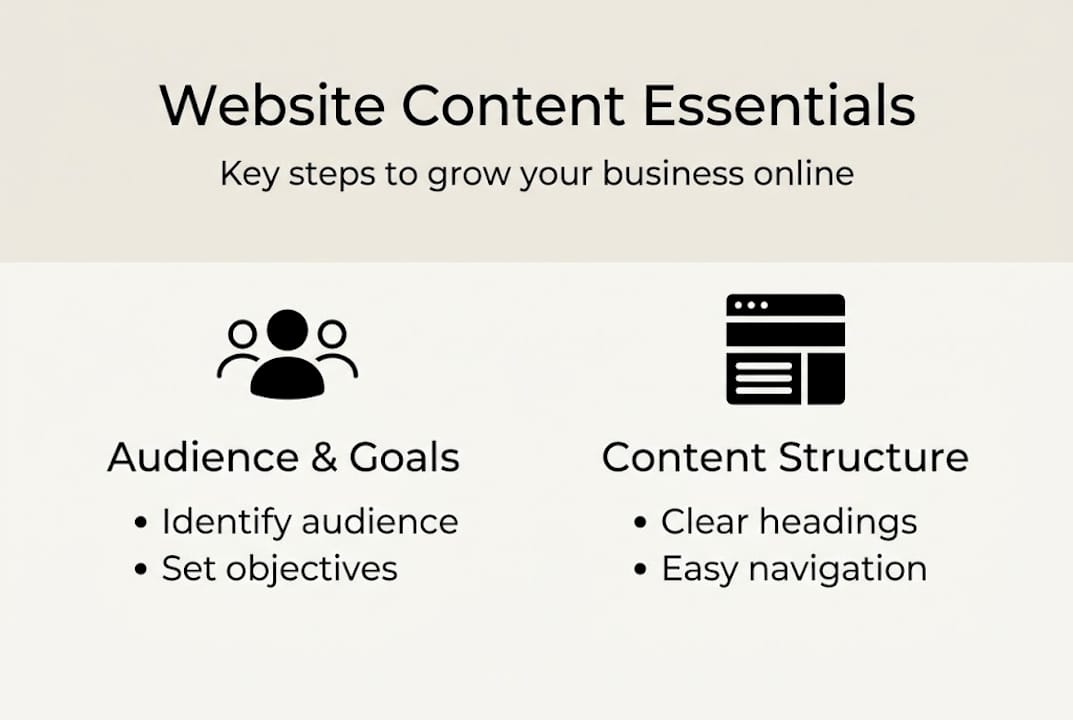
Before writing a single word, you need to know who you are writing for and what you want them to do. This sounds obvious, but many business owners skip this step and end up with pages that feel vague or unfocused. Clarifying audience and business objectives is fundamental to setting the right tone and focus for your content.
Start by thinking about your ideal customer. What problems are they trying to solve? What questions do they type into Google before finding a business like yours? What would make them trust you over a competitor? Answering these questions gives you a clear picture of what your content needs to say.
Each page on your site should also have a defined goal. Here are the most common content goals for small business websites:
- Inform: Explain what you do and who you serve
- Convert: Persuade visitors to buy, book, or call
- Capture leads: Collect emails or contact details for follow-up
- Build trust: Share credentials, reviews, and your story
Different website types call for different content strategies, so it helps to match your goals to your site purpose from the start.
| Page | Primary goal | Key content element |
|---|---|---|
| Homepage | Capture attention | Clear headline + call-to-action |
| About | Build trust | Story, credentials, values |
| Services | Convert | Benefits, pricing hints, CTA |
| Contact | Capture leads | Form, phone, location |
| FAQ | Inform | Common questions answered |
Structure your website content for clarity and impact
With your audience and goals clear, you can now plan a structure that engages and guides visitors. Clear structure improves both user experience and search engine performance, which means more visitors find your site and stay longer once they arrive.

Most small business websites benefit from a flat navigation structure, meaning visitors can reach any important page in one or two clicks. A deep structure frustrates users and hurts search rankings.
| Navigation type | Best for | Risk |
|---|---|---|
| Flat (fewer clicks) | Small businesses, service sites | Can feel cluttered if overdone |
| Deep (layered menus) | Large catalogs, e-commerce | Visitors may not find key pages |
Before you write, outline each page with this simple process:
- Write the page goal at the top of a blank document
- List the three to five main points you want to cover
- Decide where calls-to-action will appear (beginning, middle, and end)
- Identify any images, testimonials, or data that support your message
- Draft the content, then cut anything that does not serve the page goal
Explore these essential website elements to make sure each page covers what visitors expect to find.
Write and optimize your content for engagement and search
Writing for the web is different from writing a brochure or a report. People skim, scroll, and decide within seconds whether to keep reading.
Optimized content helps small businesses rank higher on search engines, leading to more visitors and conversions. That means weaving relevant keywords naturally into your headings, body text, and page titles without forcing them in awkwardly.
Here is a practical process for writing and reviewing each page:
- Write a headline that includes your main keyword and a clear benefit
- Open with one or two sentences that speak directly to the reader problem
- Use short paragraphs and bullet points to break up information
- Add a call-to-action at least once per page
- Read the page aloud to catch clunky phrasing or missing transitions
- Run a quick spell-check and review for keyword placement
Phrases that weaken your content and push readers away:
- We are pleased to offer
- Click here as link text
- Best in class or world-class service without proof
- Jargon your customers would not use themselves
- Passive constructions like services are provided by our team
Sites that refresh their content regularly see up to 65% more engagement than those that leave pages untouched.
Balancing a professional tone with relatable storytelling is also important. Share a brief example of a customer problem you solved, or explain why you started your business. That kind of authenticity builds connection and trust faster than any marketing slogan.
Review, refine, and update your content regularly
Once your website is live, regular updates ensure content keeps working for your business. A page that was accurate last year may now contain outdated prices, discontinued services, or old contact details. Stale content signals to both visitors and search engines that your business is not active.
Regularly refreshing website content improves search rankings. Here is a practical content review schedule:
| Frequency | Content task |
|---|---|
| Monthly | Check service pages for accuracy, add a new blog post |
| Quarterly | Review and refresh older blog posts, update testimonials |
| Annually | Full site audit: pricing, photos, team bios, contact details |
Common content issues to look for during each review:
- Prices or service offerings that have changed
- Team members who are no longer with the business
- Blog posts that reference outdated statistics or tools
- Pages with no call-to-action
- Broken or outdated links pointing to external sites
Why small business websites often underperform and how content changes that
Most small business websites underperform not because of poor design, but because of weak or unclear content. Visitors arrive, cannot quickly understand what is offered or why it matters to them, and leave. That pattern repeats silently every day, costing real revenue without any visible error message.
The fix is not a redesign. It is sharper, more purposeful writing. When your homepage headline speaks directly to a customer problem, when your service pages explain benefits instead of just listing features, and when your about page tells a real story instead of a corporate summary, everything changes.
Understanding the full benefits of a professional website helps clarify why content is the engine behind every other investment you make online. Design gets people in the door. Content keeps them there and turns them into customers.
Design gets people in the door. Content keeps them there and turns them into customers.
Get expert help for your website content
Writing effective website content takes time, skill, and an outside perspective. If you are ready to stop guessing and start converting, Vegas Solutions can help. We build professional websites with content strategies designed to attract local customers and drive real growth.
Whether you need a booking site, a micro store, or a full e-commerce setup, we handle the technical and creative work so your site does what it is supposed to do. Get started today and lets build something that grows with you.